

Overview:
Angaur Elementary School has become the official custodian of ancient pottery and shell tools unearthed on the island, following a July 1 agreement that establishes Palau’s first school-based archaeological exhibition — bringing history, culture and the classroom together for students and the wider community.
By: Laurel Marewibuel
KOROR, Palau — Angaur Elementary School will become the custodian of ancient artifacts unearthed on the island, under an agreement signed July 1 between two national government bureaus.
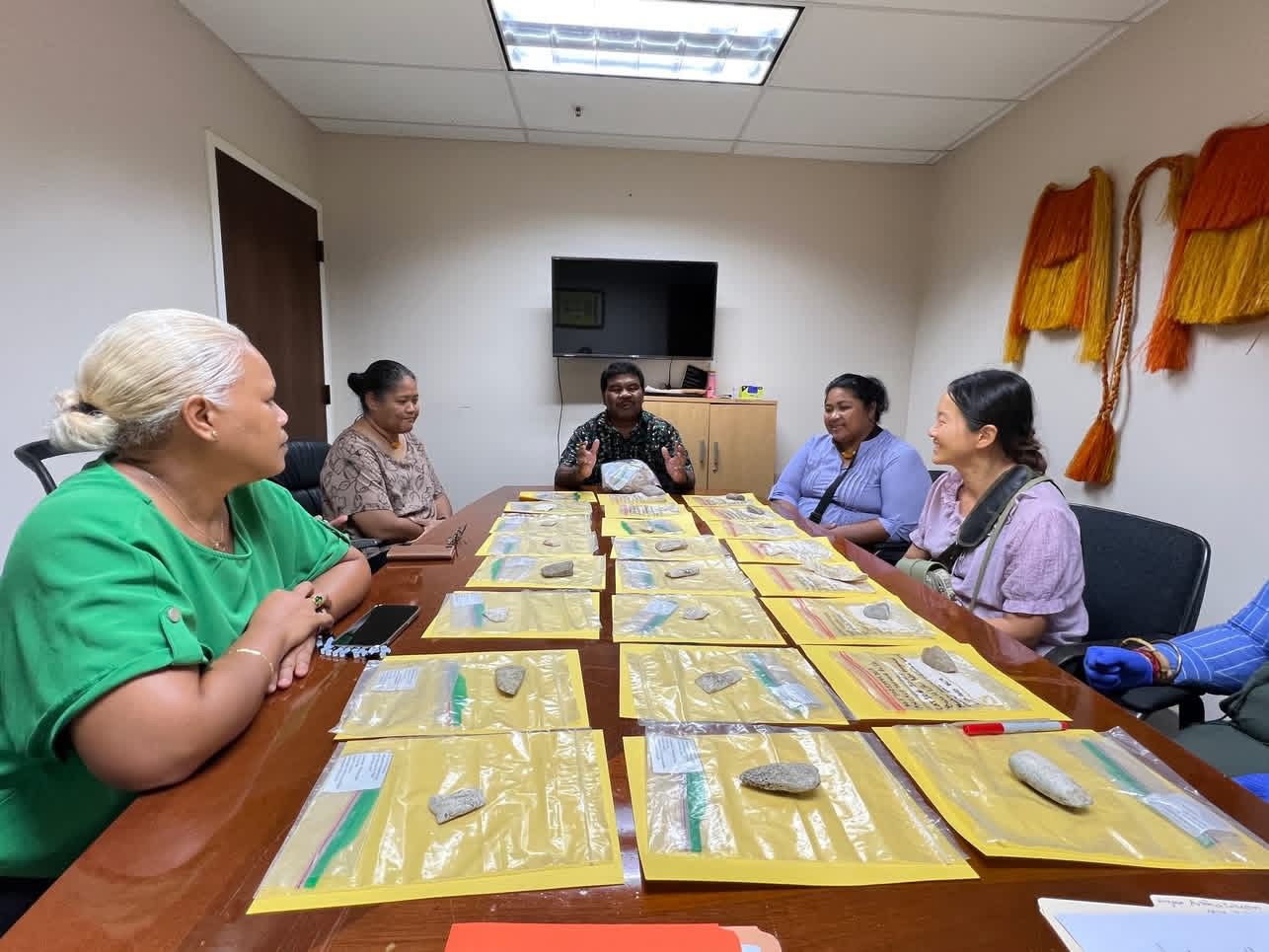
The Bureau of Cultural and Historical Preservation, under the Ministry of Human Resources, Culture, Tourism and Development, signed a memorandum of understanding with the Bureau of School Operations, under the Ministry of Education, to transfer archaeological artifacts to the school. The agreement establishes Palau’s first school-based archaeological exhibition and gallery, to be housed at the recently renovated campus.
Under the MOU, ancient pottery and shell tools excavated on Angaur will be formally transferred to the school, which will serve as their official custodian. The artifacts will be displayed in a gallery designed as an educational resource for students and the broader community.
School leaders and cultural officials said the project will give children the chance to explore the island’s past firsthand, learn the stories behind the artifacts and build a deeper appreciation for Palau’s cultural heritage. Organizers said the gallery is meant to bring culture, history and classroom learning together while making archaeological collections more accessible to residents.
The Ministry of Human Resources, Culture, Tourism and Development thanked the Ministry of Education and Angaur Elementary School for partnering on the initiative. Officials said they hope the exhibition will serve as a model for similar school-based heritage projects elsewhere in Palau, encouraging younger generations to value and protect shared cultural resources.
The exhibition marks a shift in how Palau preserves and shares its history, placing some stewardship responsibility directly in the hands of communities and classrooms.
