


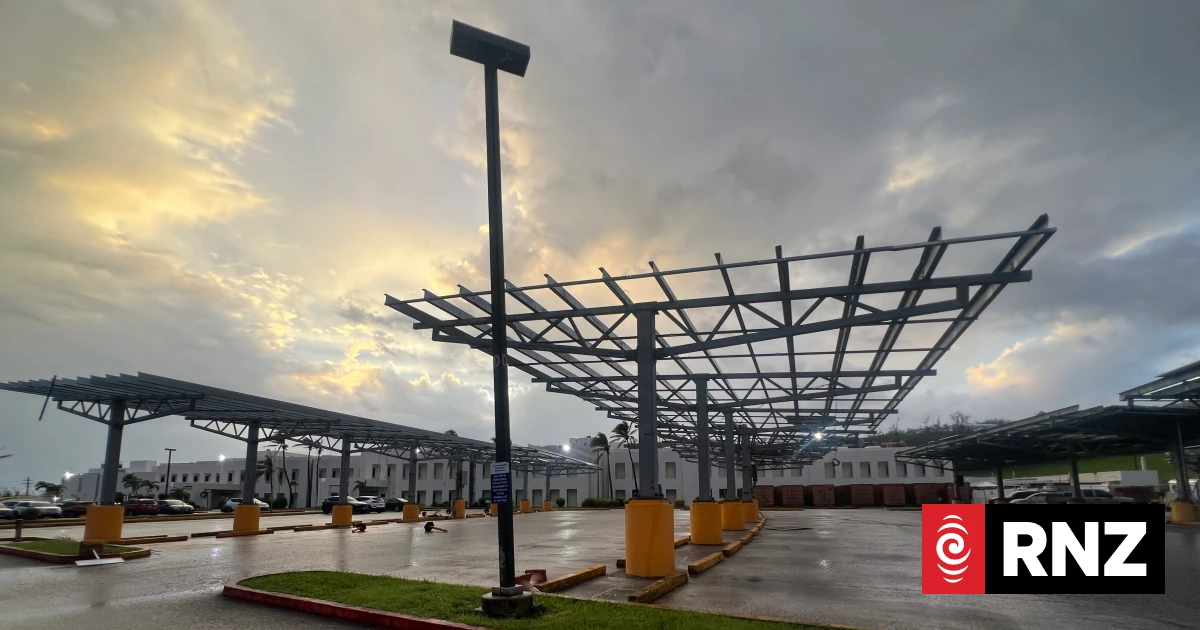
The Commonwealth of the Northern Mariana Islands (CNMI) government has declared an all-clear following the passage of Super Typhoon Bavi, allowing recovery efforts to begin across the Commonwealth while warning residents to remain cautious of lingering hazards.
Governor David Apatang, in consultation with the CNMI Homeland Security and Emergency Management Office and the National Weather Service Guam, lifted the emergency status for Saipan, Tinian, Rota, Alamagan, Agrihan and Pagan effective 12pm Tuesday.
However, officials warned that localized flooding, debris, damaged infrastructure, downed power lines and hazardous road conditions remain, particularly on Rota, which bore the brunt of the Category 5 storm.
CNMI Homeland Security and Emergency Management special assistant Clement Bermudes said initial assessments showed Rota had suffered extensive damage but expressed relief that no deaths or injuries had been reported.
“We’re so blessed across the Commonwealth … there was no fatality. I think that goes to the people heeding the warnings, preparing and seeking shelter, and then staying sheltered in place when we issued that advisory.”
Bermudes described Rota as “quite devastated,” with damage to roads, ports and critical infrastructure, while crews worked to restore access and essential services. He said Tinian and Saipan escaped damage on the scale experienced during Super Typhoon Sinlaku earlier this year, while federal and local agencies continued assessing losses before seeking a major disaster declaration.
Meanwhile, National Weather Service Guam meteorologist Brandon Aydlett said preliminary assessments indicated Bavi produced stronger winds than Sinlaku but moved much faster through the Marianas, reducing the duration of destructive conditions across Guam, Saipan and Tinian.
“The speed of motion of Sinlaku was extremely slow, around 5 miles per hour. Super Typhoon Bavi was moving a bit faster, anywhere from 10 to 13 miles per hour, and so that really significantly reduced the duration of impacts across the Marianas.”
Aydlett said meteorologists were still analysing damage on Rota to determine the storm’s peak wind speeds but estimated Bavi reached 175 to 180mph at its strongest near the island. He also urged residents not to become complacent, saying forecasters were monitoring Invest 97W in eastern Micronesia.
“I wouldn’t say don’t be too alarmed just yet. It is something to watch, to be aware of, not necessarily to act on yet.”
He added that El Niño conditions were expected to keep the western Pacific active during the remainder of the tropical cyclone season.
As recovery gets under way, the Micronesia Climate Change Alliance has launched a fundraising campaign to support Rota residents, with donations earmarked for food, water, cooking fuel, hygiene supplies and other urgent needs identified by local households.
“Every need on this list came directly from Luta households. Your donation goes straight to meeting them.”
The organisation said donations marked “Luta” would go directly toward recovery efforts as families continue rebuilding after consecutive super typhoons struck the island.
