



The 2026-27 national budget, themed “a responsible budget for a sustainable future,” has arrived at a critical crossroads for Fiji.
Facing a global fuel crisis that slashed projected tax revenues down to $3.3 billion, the coalition government had to chart a strict path of fiscal discipline while simultaneously funding massive, non-negotiable national priorities.
Total revenue was pinned at $3.82 billion, but with indispensable spending locking the overall budget at $4.87 billion, the nation faced a calculated $1 billion fiscal deficit, amounting to 7% of GDP.
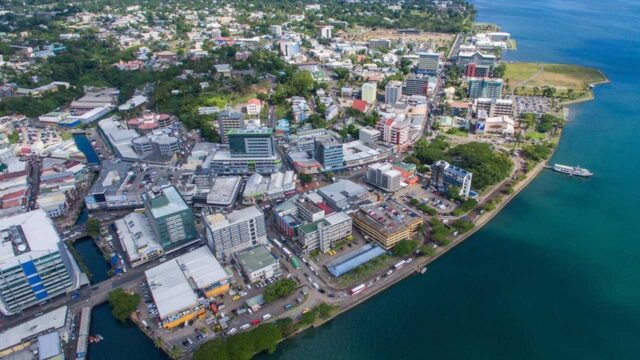
This pushed total public debt to a projected $12.6 billion by July 2027, or 84.8% of GDP.
Finance Minister Esrom Immanuel, while announcing the plan for the new fiscal year, stated that to absorb over $200 million in urgent, new expenditure commitments – including the general elections, a national census, a referendum, and escalating debt servicing costs – the government implemented an aggressive austerity campaign. Operating expenditure was tightly capped at $3.99 billion.
Immanuel says to achieve this, operational spending across all government ministries, alongside grants to state entities and independent commissions, was cut by a flat 10 percent.
Traveling, workshops, and administrative costs were severely restricted, funding for vacant public positions was slashed by 50 percent, and a 20 percent salary cut for Ministers and Members of Parliament remained firmly in place.
Furthermore, Immanuel says a holistic civil service review was launched to redeploy staff from over-staffed agencies into under-resourced frontline roles.
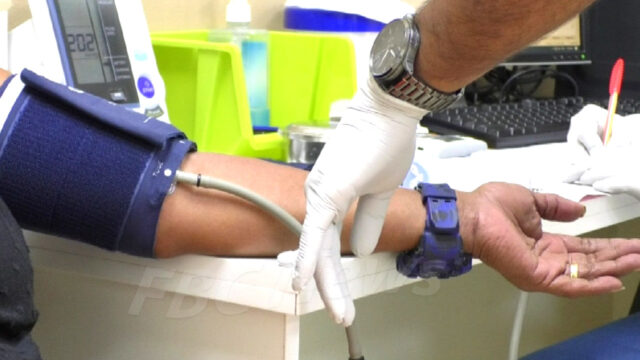
He adds that despite these deep operational cuts, the budget strategically protected critical infrastructure and healthcare.
The government allocated $876 million for capital expenditure as part of a broader, $2 billion multi-year infrastructure package spanning the next four to five years.
Financing for $1.5 billion of these projects had already been locked in with international development partners, funding vital upgrades like the expansion of the Kinoya wastewater plant, primary healthcare facilities, increased bed capacity at CWM Hospital, and four major bridge replacements.
Looking further ahead, another $5 billion in public infrastructure projects—targeting renewable energy transition, port redevelopments, and airport expansions—was lined up to be executed through state-owned entities.
Immanuel says that the ultimate goal was to double capital spending in the medium term, shifting the national expenditure mix to a healthier 70:30 operating-to-capital ratio.
This infrastructure push was designed to jumpstart an economy under pressure. Due to the fuel crisis and global headwinds, Fiji’s 2026 economic growth forecast was cut in half, from 3 percent down to 1.5 percent, lagging behind the nation’s 5 percent long-term development target.
Because raising taxes would only worsen the cost of living, the government bet entirely on private-sector-led growth to restore fiscal balance and eventually reduce the deficit to a safer 3 percent.
To give businesses the confidence to expand, the government committed to a stable tax regime and took direct aim at bureaucratic red tape.
A fast-track task force was created to eliminate bottlenecks between investors and approval agencies, while a new agreement between Investment Fiji and the Ministry of Immigration promised to slash investor permit processing times from 21 days down to just five.
Fortunately, relief was already visible on the horizon: international fuel prices dropping below $80 a barrel signaled upcoming domestic fuel price cuts, promising to ease inflation.
With macroeconomic fundamentals secure, low interest rates, strong foreign reserves, and a robust $8.9 billion pipeline of 254 active private investment projects – led heavily by landmark tourism developments across the islands – Fiji positioned its private sector to spearhead the journey back toward long-term fiscal health.