

Overview:
Palau has made a historic call for the United Nations to consider placing nicotine under international drug control systems ahead of the Pacific Islands Forum, a move officials say could reshape global tobacco regulation. The proposal targets nicotine—the addictive substance in cigarettes, vapes and pouches—for formal UN scheduling review, a step not taken in international drug policy discussions in more than seven years.
By: Ngeldei Tulop
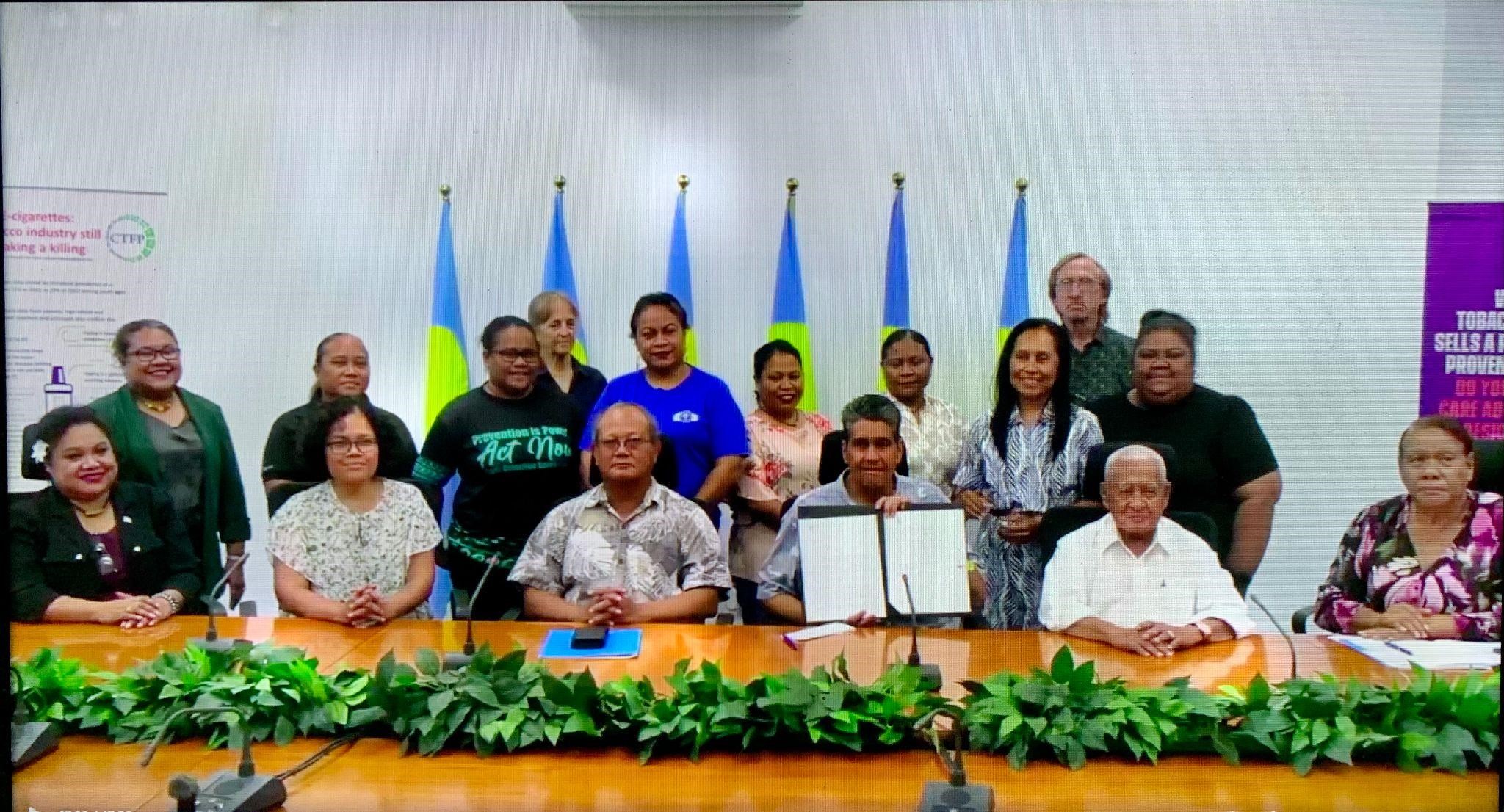
Koror, Palau — Ahead of the Pacific Islands Forum, Palau has made history by becoming the first nation to formally request that the United Nations examine nicotine for placement under international drug control systems, a move officials say could reshape tobacco governance across Pacific Island countries and beyond.
The proposal asks for nicotine, the addictive compound found in cigarettes, vapes and pouches, to undergo United Nations scheduling consideration, a step not taken in more than seven years of international drug policy talks.
President Surangel Whipps Jr. said, “We may be a small nation, but the scale of a problem has never determined who acts on it. Millions die every year. More than one billion are dependent on nicotine – most of them hooked as children. We could not look away. We call on governments around the world to join us in asking the United Nations to finally treat nicotine like the toxic and addictive drug it is.”
Tobacco and nicotine are linked to more than seven million deaths annually, while about one billion people worldwide are dependent on nicotine.
Among adolescents, 15 million aged 13 to 15 use e-cigarettes globally, nearly nine times the adult rate.
First Lady Valerie Whipps, chair of the Coalition for Tobacco Free Palau, said, “This is about our children. A new generation of young people across the Pacific are being targeted by products that have never been critically reviewed under United Nations law. Every child has the right to grow up free from manufactured nicotine addictions, no matter how small their island.”
In 2023, Palau banned importation, distribution, sale, possession and use of electronic cigarettes under national law.
In 2025, Palau ranked second out of 100 countries in the Tobacco Industry Interference Index, reflecting minimal industry influence on public health policy.
Officials cited data showing 45.7 percent of students aged 13 to 15 report vaping, 33.1 percent exposed to smoke at home, and 69 percent support bans on smoking in enclosed public places.
Cigarette use among youth stands at 20.8 percent, above the United States rate of 14 percent, along with 41.2 percent reporting betel nut chewing with tobacco.
Noncommunicable disease indicators include 75.6 percent overweight or obesity, 47.4 percent hypertension, and 69.4 percent consuming fewer than one serving of fruit per day.
Officials said the initiative seeks to build consensus among Pacific Island nations ahead of the forum where coordinated responses to noncommunicable disease and nicotine products are expected.
Leaders across the region say the proposal aims to strengthen cooperation among Pacific Island states as health concerns linked to nicotine use continue to rise in youth populations and place pressure on fragile health systems.
Supporters argue that aligning United Nations drug control frameworks with emerging nicotine products could improve enforcement, reduce cross border trafficking and limit exposure among adolescents.
While any decision at the United Nations remains uncertain, the proposal highlights a coordinated push from small island governments seeking influence in international policy discussions despite limited population size and geographic isolation.
Will other Pacific Island nations stand alongside Palau in urging the United Nations to act, or remain on the sidelines as the momentum for global nicotine control builds?
