


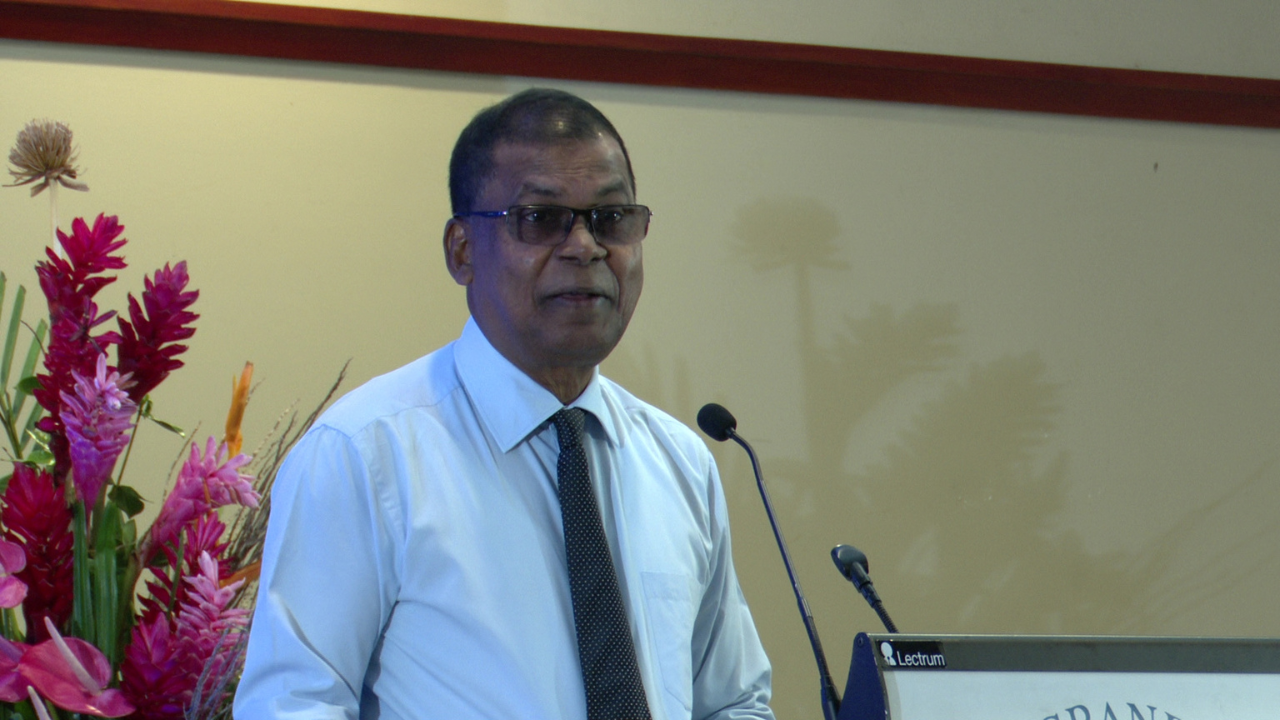
Fiji’s core economic challenge is the gap between long-term plans and actual delivery, according to Government MP and former Finance Minister Professor Biman Prasad.
Speaking at the State of the Economy Dialogue 2026, he said Fiji already has a clear roadmap under the National Development Plan and Vision 2050 to reach high-income status.
However, he warned that the country will not achieve this through business as usual.
He said this point has also been raised by the IMF, World Bank and other partners.
Prof Prasad said tourism remains Fiji’s main economic strength. It benefits from location, environment and existing infrastructure.
However, he warned that heavy reliance on the sector leaves the economy exposed to external shocks.
Diversification into agriculture, fisheries, manufacturing and high-value exports, according to Prof Prasad has been slow and uneven.
He pointed to repeated global shocks as a major setback for development progress.
He described the current global fuel crisis as one of the most severe in recent years.
Prof Prasad compared it to the oil shocks of the 1970s and the global financial crisis of 2008. He said such events have driven inflation, debt pressure and currency instability in Fiji.
He said the current crisis differs from COVID-19. During the pandemic, job losses were the main concern.
He said the current issue was rising living costs, even where employment remains stable.
The Government MP warned that this continues to strain households.
Prasad said Fiji’s recovery must be seen in context. He said the economy was already slowing in 2019 before the COVID-19 collapse.
He added that the pandemic worsened an already weak fiscal position and pushed up debt levels.
He said government reforms since 2022 have focused on fiscal repair. These include tax changes and efforts to narrow the budget deficit.
He said the deficit has fallen from 7.2 per cent in 2022 to between 2.5 and 3.4 per cent in later years.
He also said debt-to-GDP has dropped from 91.8 percent in 2022 to about 79 percent in 2025.
However, he said these improvements do not signal full stability. He said fiscal recovery was still fragile and exposed to shocks.
He supported borrowing for essential infrastructure such as health and education and this this must remain balanced with fiscal discipline.
Prof Prasad also highlighted social support programs. He cited more than $170 million in back-to-school assistance for over 200,000 students each year. He also referred to about $650 million in debt write-offs for around 53,000 families.
He pointed to reforms in state-owned enterprises and support for small and medium businesses and also stated that improving the ease of doing business remains essential.
Prof Prasad said Fiji’s growth must remain sustainable and inclusive.
He stressed the need for stronger governance and sound financial management to meet Vision 2050 targets.
