


Overview:
A new Savings Bond Program proposed by Japanese economist Yoshinao could help keep more of Palau’s money at home, fund local businesses and infrastructure projects, and give families a new way to save for education and retirement.
Japanese economist says new program could fund businesses, infrastructure and future savings while reducing reliance on overseas borrowing.
By: L.N. Reklai
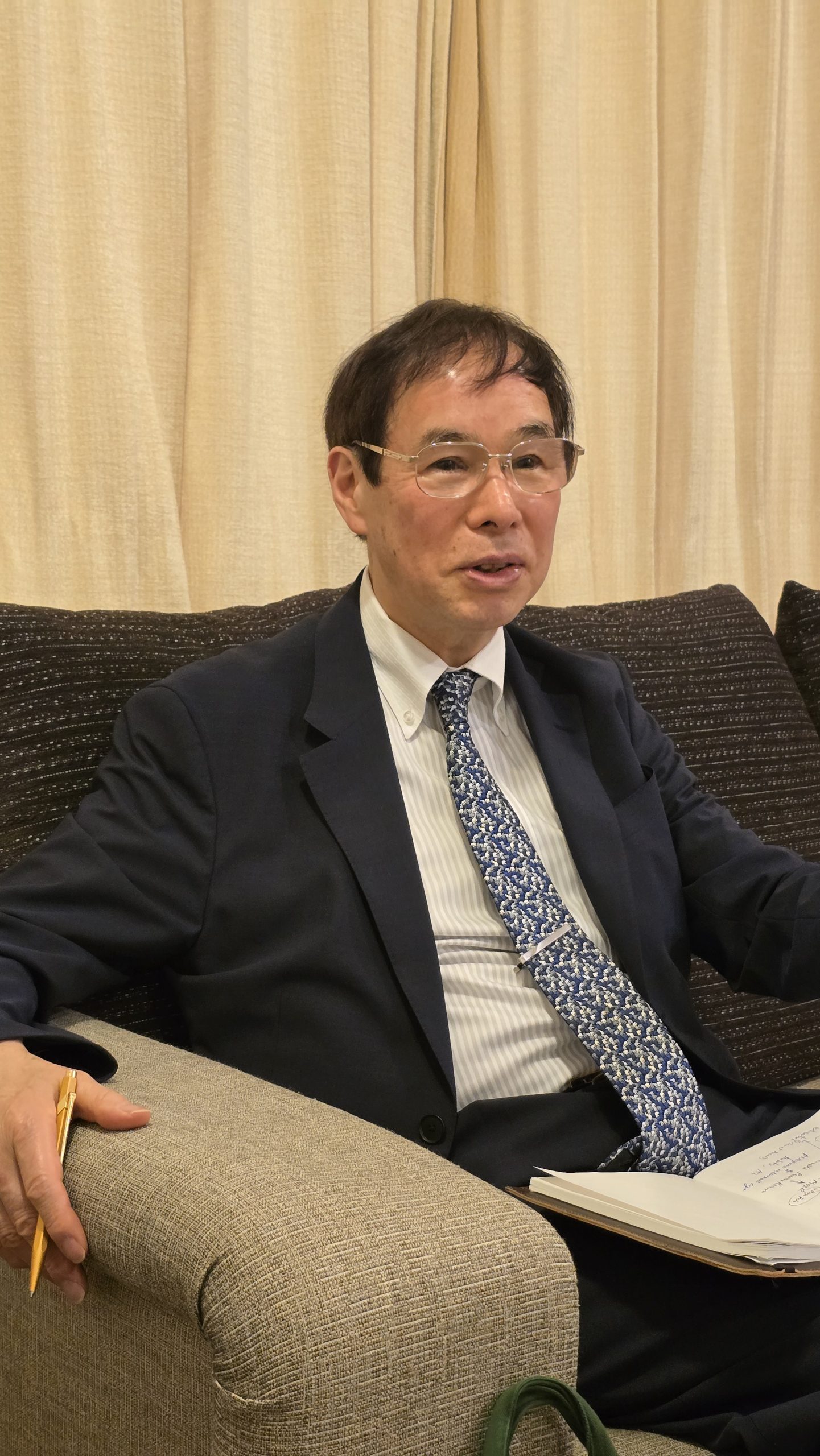
KOROR, Palau — A proposed Savings Bond Program could help keep more money circulating within Palau, provide affordable financing for local businesses and infrastructure projects, and encourage residents to save for retirement and education, according to Japanese economist and Professor Emeritus of KEIO University, Dr. Yoshino Naoyuki.
Speaking in an interview with this publication, Yoshino, also a member of Palau’s Economic Advisory Group, said one of the country’s major economic challenges is that most local bank deposits are invested overseas rather than being used to support development at home.
“About 90% of Palau’s bank deposits are invested in the United States,” Yoshinao said. “As a result, there is a scarcity of money in Palau, and the National Development Bank has to borrow money from outside to make loans locally, leading to higher interest rates for local people.”
The challenge, he said, is finding enough capital to finance infrastructure projects and support local businesses at lower and more competitive interest rates than those currently available through the National Development Bank of Palau.
To address that problem, Dr. Yoshino is proposing the creation of a local Savings Bond Program modeled after a similar system in Japan.
Under the proposal, Palauans would be able to purchase government-backed savings bonds as a way to save for their children’s education or for retirement. The bonds would be backed by the full faith and credit of the Palau government, providing a secure savings option for residents.
Funds collected through the program would be managed by the Ministry of Finance and then loaned to the National Development Bank of Palau at lower interest rates. The development bank would use the money to provide loans to small and medium-sized businesses and to help finance infrastructure projects.
Interest earned from those loans would be credited back to the individual savings bond accounts. Bondholders would be able to withdraw their funds, along with accumulated interest, after 10 years to help pay for education expenses or supplement retirement income.
Yoshino said the program has already entered a trial phase with a Japanese company that is developing a mobile application for the initiative.
The app would allow users, including children, to purchase savings bonds directly from their smartphones and monitor their account balances.
According to Yoshinao, the program could help foster a stronger culture of saving among Palauans, which he described as an important characteristic of a strong and resilient economy.
The Government of Japan is supporting the initiative through technical assistance and is working with Palau’s Ministry of Finance to develop the processes needed to launch the program.
If implemented, the Savings Bond Program could provide a new source of locally generated capital, reduce dependence on foreign borrowing and help direct more of Palau’s savings toward investments that benefit the country’s economy and future generations.
