


Overview:
Palau’s aging water infrastructure, drought conditions and system inefficiencies took center stage at the 2026 Palau Development Symposium, where officials outlined the growing challenges of maintaining reliable water service while pursuing long-term sustainability goals.
2026 Development Symposium highlights drought risks, water loss and nationwide utility upgrades
By Ngeldei Tulop
KOROR, Palau — Aging infrastructure, drought conditions and rising maintenance demands are placing increasing pressure on Palau’s water systems, officials said during presentations at the 2026 Palau Development Symposium.
Held under the theme “Keeping the lights on and the water flowing,” the symposium brought together government agencies, utility officials, development partners, students and community members to discuss the nation’s infrastructure needs and long-term sustainability goals.
Representatives from the Palau Public Utilities Corporation presented an overview of water operations nationwide, highlighting both operational progress and the growing challenges of maintaining reliable water service across the country.
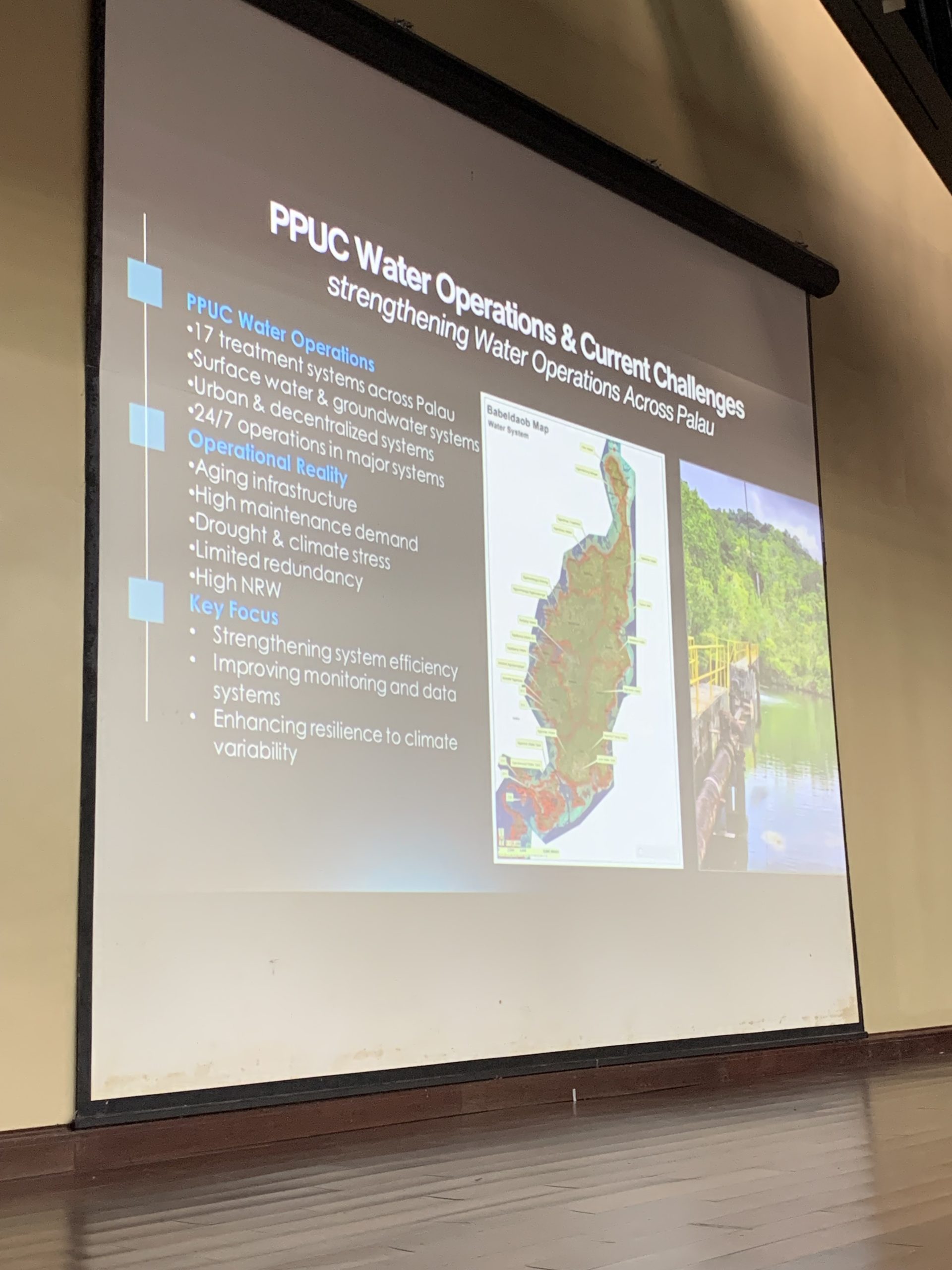
According to presentation materials shared during the symposium, PPUC currently manages 17 treatment systems across Palau, including both surface water and groundwater systems. Major systems operate around the clock to supply communities with water.
Officials said the country’s water infrastructure faces several persistent challenges, including aging pipelines and facilities, high maintenance costs, climate-related stress, drought conditions and limited system redundancy. Presenters also pointed to significant levels of non-revenue water loss, often caused by leaks and inefficiencies within aging systems.
Maintaining decentralized water systems across multiple states also remains a major operational challenge, officials said.
PPUC representatives said the corporation is focused on improving system efficiency, strengthening operational monitoring and data collection, and increasing resilience against climate variability and future water shortages.
Presentations during the symposium also highlighted the extensive day-to-day work required to maintain stable water service throughout Palau. Officials described continued reliance on manual monitoring, leak detection, emergency repairs, field coordination and rapid response operations to keep systems functioning.
Infrastructure improvements currently underway include upgrades to pipelines, treatment facilities, groundwater monitoring equipment and operational tracking systems designed to improve reliability and provide better visibility into system performance.
Renewable energy development was also featured prominently during the symposium, including updates on Palau’s first utility-scale solar power project.
A fact sheet presented at the event identified the initiative as the “Palau Independent Power Producer — Solar Generation and Battery Energy Storage System,” supported through financing from the Australian Infrastructure Financing Facility for the Pacific and the Australian government.
Organizers said the symposium was intended to increase public awareness of national development projects while encouraging broader discussion on infrastructure planning, energy security and the long-term reliability of Palau’s water systems.
