


Overview:
Palau officials and lawmakers are reviewing new Social Security reform projections showing long-term funding pressures under the current retirement and contribution structure. A government modeling program presented this week outlines possible policy options aimed at protecting future benefits while maintaining stability for current retirees.
By: Ngeldei Tulop
KOROR, Palau — A financial modeling program examining Palau’s Social Security system projects rising long-term pressure on benefit funding under current contribution and retirement structures, according to figures displayed in a government modeling spreadsheet reviewed this week.
The Excel-based “Social Security modeling program” outlines several policy assumptions and contribution scenarios designed to test the sustainability of the retirement system over coming decades.
The model shown in the presentation uses a retirement structure labeled “Current,” with workers required to complete 35 years for full basic benefits and a minimum of 38 qualifying quarters to be considered fully insured. Employee and employer contribution rates after age 27 are each listed at 7 percent.
System assumptions in the model include a 5 percent investment return, 2.5 percent wage growth, and 2 percent annual inflation.
The program also includes a set of graduated benefit bands. Under the displayed scenario, the first $250,000 falls under a 1 percent rate, while higher income bands decline incrementally to 0.25 percent for earnings above $500,000. A basic minimum benefit of $4,000 is also included in the scenario.
Charts shown in the model project Social Security cash flows between 2026 and 2056. One graph indicates contributions and earnings rising steadily over time, while benefits and administrative costs appear to level off after gradual increases during the early projection years.
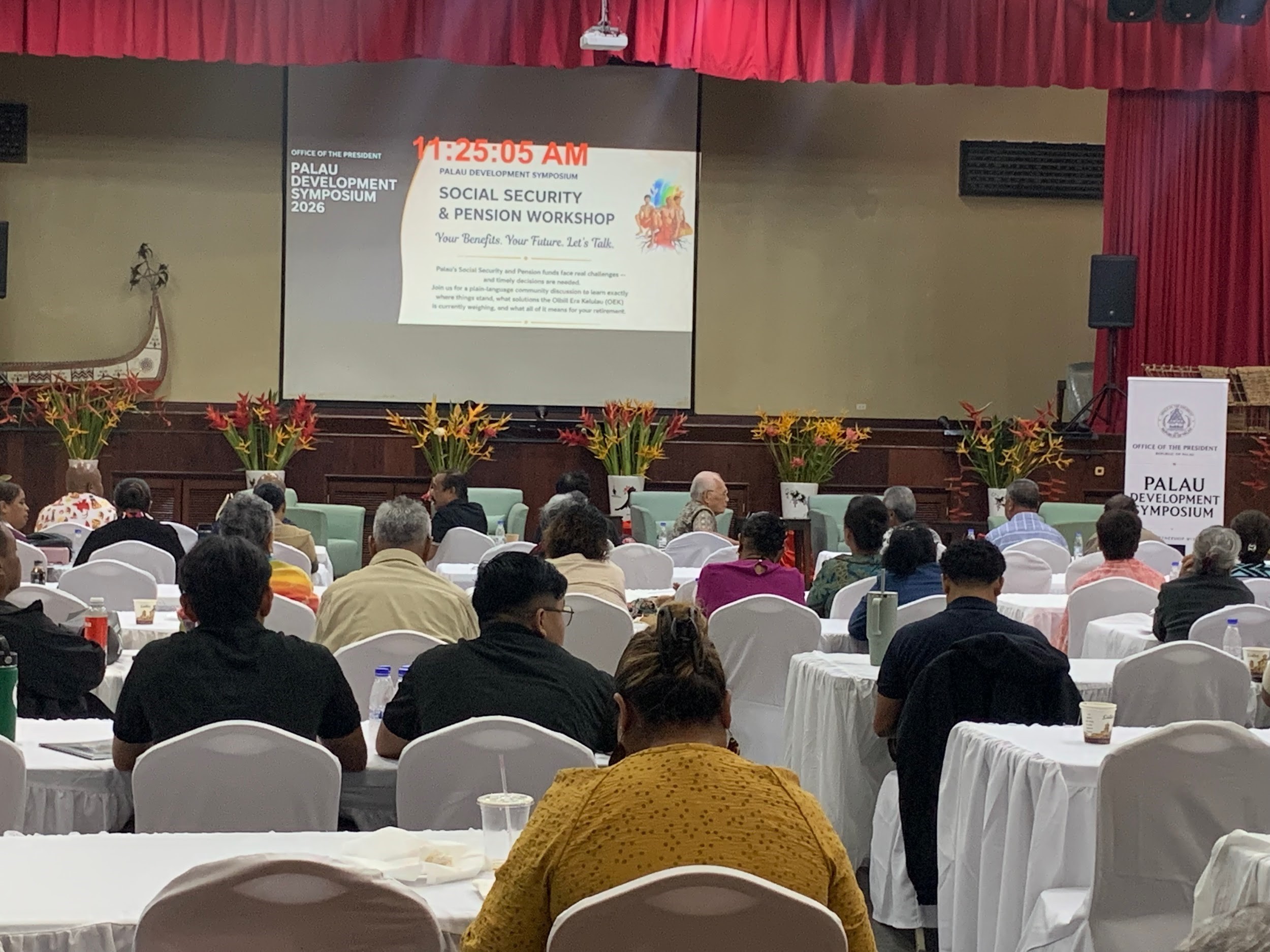
Delegates, senators, government officials and members of the public gathered to review the Social Security reform model and discuss options aimed at protecting the long-term stability of the retirement system.
Participants examined projected funding trends and discussed how potential policy adjustments could help ensure future generations receive benefits comparable to those available today. Discussions focused on balancing sustainability of the fund with maintaining support for current and future retirees.
The reform model presented several policy tools that would allow analysts and lawmakers to test changes involving retirement age, contribution rates, pension increases tied to wage growth and possible cash injections into the system.
Officials said the modeling program is intended to support ongoing policy discussions and provide data-driven projections as leaders consider possible reforms to address long-term demographic and economic challenges facing the Social Security system.
No final policy decisions were announced during the discussions, and officials indicated that additional consultation and analysis would continue before any reform measures are formally proposed.
