


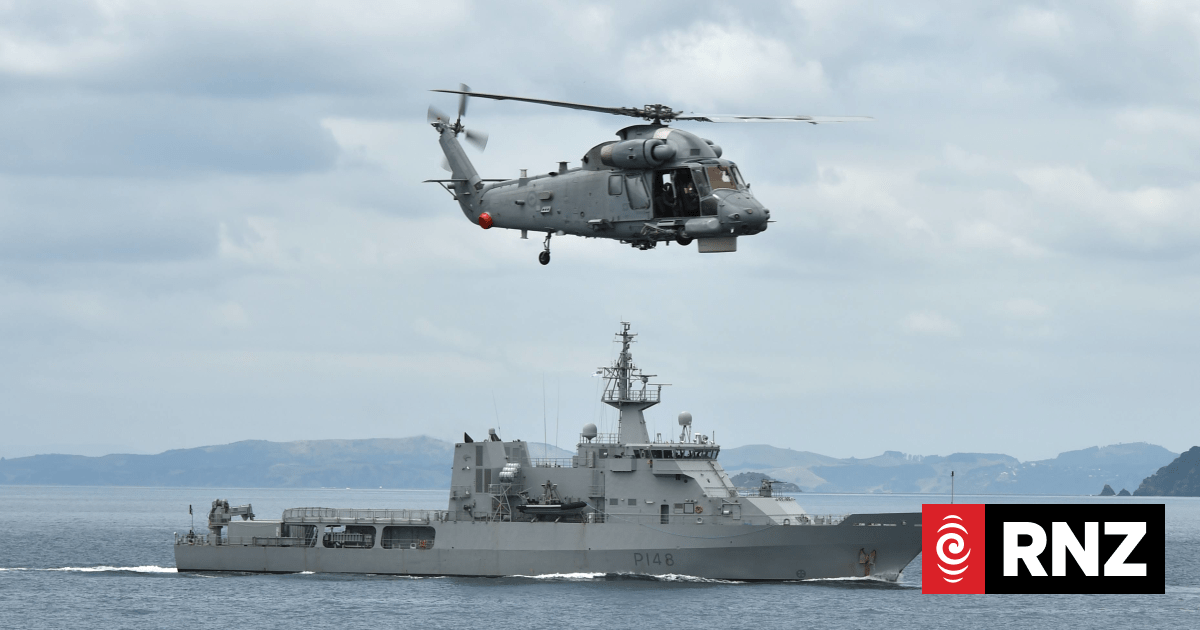
New Zealand has been steadily pushing Pacific regional defence co-operation on a number of fronts.
Photo: NZDF
New Zealand’s government is increasingly eager to promote the buy-in of Pacific nations for closer defence force integration in the region, amid concerns about militarisation of the region.
The security environment has been shifting rapidly, and regional defence is becoming more complex, leaving Pacific Islanders wondering if their “Ocean of Peace” is slipping out of their grasp.
In recent months, the defence and police forces of Australia and New Zealand have been increasing cooperation with counterparts in Pacific countries including Fiji, Tonga, Samoa and Vanuatu in efforts to combat transnational crime, especially the illicit drug trade.
But as a number of Pacific Island countries weigh up signing major bilateral treaties or agreements with the likes of Australia, China and the United States, New Zealand has been steadily pushing Pacific regional defence cooperation on a number of fronts.
The communiqué from last October’s South Pacific Defence Ministers Meeting (SPDMM) in Chile is instructive.
The SPDMM – which involves New Zealand, Australia, Chile, Fiji, France, Papua New Guinea and Tonga – notes the leadership role New Zealand has taken on better coordinating regional defence architecture.

New Zealand is contributing to the militarisation of the Pacific, says Pacific historian Marco de Jong.
Photo: Supplied
The member countries agreed to push for a defence advisor from their collective to be embedded in the secretariat of the Pacific Islands Forum (PIF), whose secretary-general Baron Waqa attended the Chile meeting and appeared to support closer integration.
While the advisor position is yet to be established, the SPDMM is surging ahead with a range of new regional defence initiatives, including developing the Pacific Response Group, under which defence personnel from Australia, Fiji, France, New Zealand and PNG work together to support coordinated humanitarian assistance and disaster relief responses across the Pacific.
Social licence
A briefing from March’s joint meeting of the Defence and Foreign ministers of Australia and New Zealand, emphasised how they aim to promote “the sense of integration through Pacific defence forces’ and to ‘enhance the sense of Pacific forces meeting Pacific security needs”.
It also highlighted a keenness to “get more links between SPDMM and PIF so that these voices are heard directly by the region”.
“The briefings reveal New Zealand’s role in integrating and aligning Pacific defence forces alongside a considerable anxiety about regional social licence,” Pacific historian Marco de Jong said.
He said the language being used “speaks to a programme of influence and public relations, calibrated to downplay criticism that New Zealand is contributing to the militarisation of the Pacific”.
A representative with Development Alternatives with Women for a New Era, Maureen Penjueli, who is also a long time advocate for indigenous rights in the region, said there had been a lack of consultation with the wider Pacific Islands region about the new defence tack.
“We’ve seen so much occupation by those in the defence interests area. For example, the Australian National Security College takes a very primary seat at the Pacific Islands Forum on security. We’ve got competing interests, which is the Fusion Centre that’s in Vanuatu,” Penjueli said.
“When you add more and more players to this regional architecture that already has enough players on defence and security, it complicates the governance structure in a way. Who does it respond to? Who is it answerable to?
“It does not go through the rigour of national consultations, consultations with civil society around some of these bigger significant shifts around defence and security.”

Maureen Penjueli at a United States Institute of Peace’s panel discussion in October 2023.
Photo: Facebook / Pacific Network on Globalisation
Long-standing partner
New Zealand is a long-standing contributor to Pacific regional initiatives, and its Defence Force is well valued in the region, especially in responding to disasters, humanitarian needs, transnational crime and maritime security threats, and also including in training support.
New Zealand’s Defence Minister Chris Penk, who replaced Judith Collins in the role since March’s 2+2 Ministerial Meeting with Australia, said that New Zealand always worked to adapt its work with Pacific partners to their context, culture and operational needs.
He told RNZ Pacific that in order to support closer cooperation between Pacific militaries, members were also looking at a SPDMM Status of Forces Agreement.
“This would provide a common legal framework for personnel to deploy into each other’s countries more easily, strengthening our collective ability to respond to maritime security challenges as well as humanitarian and disaster relief events.”
Asked if New Zealand is contributing to militarisation of the Pacific Islands region, Penk said Pacific partners had warmly welcomed the country’s continued presence and partnership in the region
“The New Zealand Defence Force contributes to regional responses where it is agreed that defence force personnel and assets should be involved, including humanitarian assistance, maritime domain awareness, fisheries patrols, and search and rescue operations.
“As a Pacific military, we are proud to work alongside our Pacific partners to help respond to the challenges facing our region.”

Defence Minister Chris Penk
Photo: RNZ / Nathan McKinnon
‘Ocean of Peace’
Penjueli warned that militarisation of the region was escalating against the wishes of most Pacific Islands people.
Making things more complicated, she said, was the growing number of security treaties and agreements that Island countries were being drawn to.
She said they were no longer just about defence or security inter-operability, and often included development and economic dimensions, arrangements that “entangled” Pacific countries into wide ranging commitments beyond traditional military and security ties.
Penjueli worried that the interests of the Islands countries themselves were more than ever being buried under broader geopolitical jostling.
“We were told that this is to ready the region in an anticipation, to contain China, and we’re told that this is about the drug trade and the drug war that’s taking place.
“Yet for the Pacific, climate change or the climate crisis, remains our significant issue around security. So, I think the agendas are very different.”
At their last leaders summit, PIF countries signed up to the Blue Pacific Ocean of Peace Declaration, formally committing the region to peace, sovereignty, and climate justice.
However, Penjueli said being a true ocean of peace required demilitarisation and de-escalation – something which she suggested is not the direction that the defence-oriented governments of the region are heading in.
