


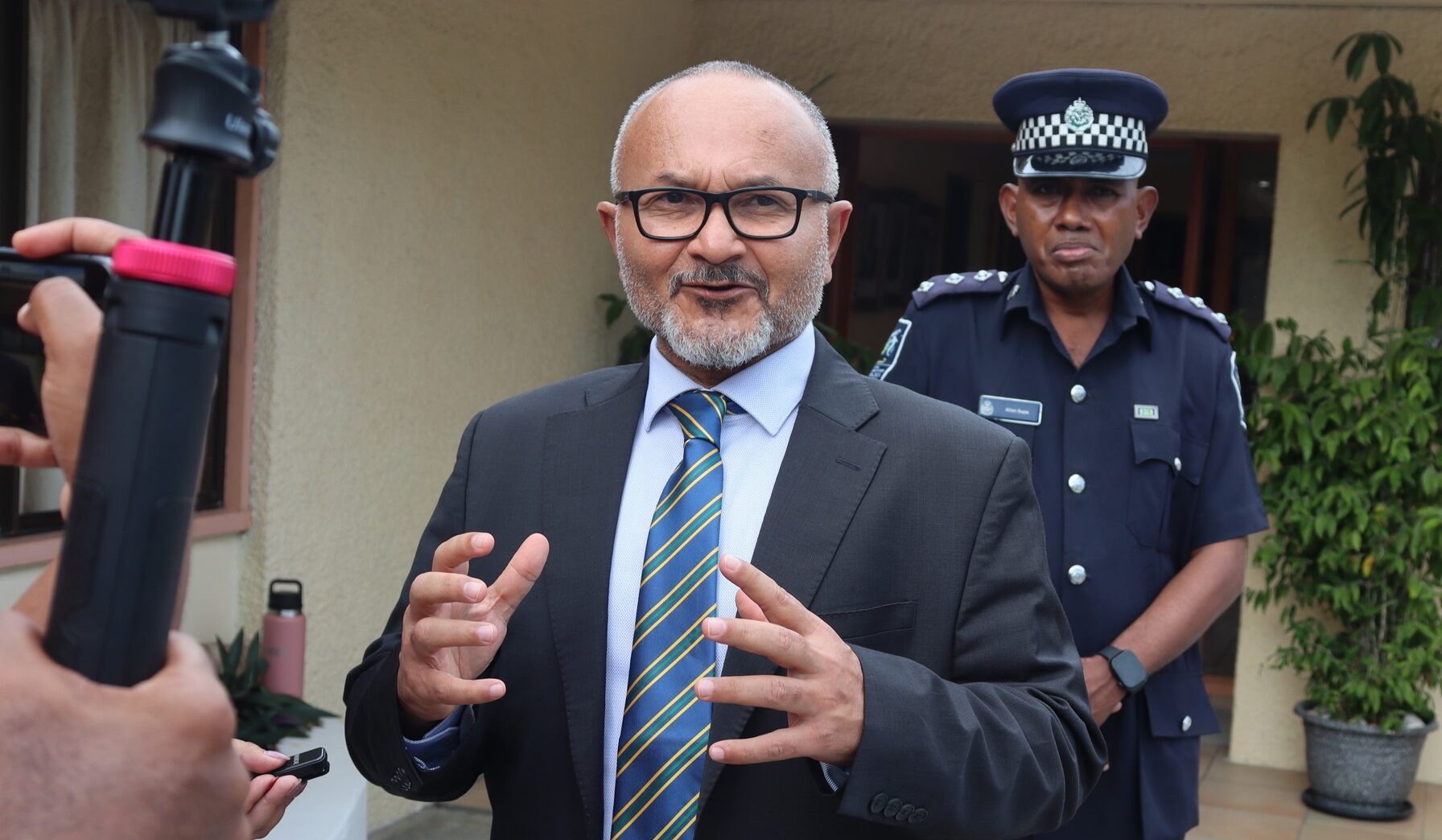
Solomon Islands’ new Prime Minister, Matthew Cooper Wale, has promised the country that “change is coming”. He was elected prime minister on 15 May 2026 following a vote of no confidence in his predecessor, Jeremiah Manele.
Wale could make for a good prime minister. He is smart and visionary, and a seasoned politician who has been a member of parliament for nearly two decades. He served as Leader of the Opposition for seven years, held a ministerial portfolio in a previous government, and chaired the Solomon Islands Parliament’s Public Accounts Committee. He understands how government systems work.
However, Wale faces several challenges. First, he has only two years to implement his government’s policies and make his mark as prime minister. That’s a very short period in which to make any substantive impact before the next general election in 2028. Wale acknowledges the constraint, saying “obviously we can’t do everything in two years … but I don’t want to be accused of doing nothing”.
Although his government has not yet officially published its policies, the Prime Minister’s statements so far indicate ambitious goals, including free education for all, amendments to various pieces of legislation and addressing unemployment and corruption. Free education is an issue Wale has championed since he was Minister of Education between 2008 and 2010 under the Derek Sikua-led government, although he later admitted that the policy had failed. How things will be different this time remains anybody’s guess.
Funding these ambitions will be a challenge. Wale inherits the 2026 budget crafted by the Manele-led government. Unless he can make substantial supplementary appropriations, his government is constrained by this budget. This will make it difficult to deliver some of the promises, such as free education. Likewise, his promise of a stronger job market will require long-term economic growth.
There are, however, measures he could implement relatively quickly, such as closing sufferance wharves — privately operated ports authorised by Customs to handle imports and exports outside the main government wharves, which have been associated with revenue leakage — and cancelling tax exemptions that have reportedly cost the government millions of dollars. His government could also push ahead with the Forestry Amendment Bill 2025 and the Mineral Resources Bill 2025, both of which had already been approved by Cabinet and submitted to the Bills and Legislation Committee under the Manele government. These bills affect two industries that have significant economic, environmental and social impacts and are in urgent need of updated legislation.
Another challenge for Wale is keeping together the loose coalition that forms his government. This will be difficult, especially given that members of his cabinet are drawn from several political parties as well as independent members. He will therefore have to make compromises that could create tensions and potentially undermine the stability of his government, much like the previous Manele-led administration.
An example of such a compromise is his appointment of Oliver Salopuka, Member of Parliament for Savo-Russells, as Minister of Lands, Housing and Survey. Salopuka is one of the directors of Levers Solomon Islands Limited, which has a pending land case involving the Solomon Islands Government. The Attorney General filed an appeal following an April High Court decision in the case. As Minister of Lands, Salopuka will be responsible for matters directly related to land administration, raising questions about possible conflicts of interest. This could become politically messy for Wale even before his government finds its footing.
Foreign policy is another arena Wale will need to navigate carefully. His appointment of Rick Hou as Foreign Minister instead of Peter Kenilorea Junior, whom many expected to be appointed, was telling. Kenilorea has a history of anti-China rhetoric. Hou’s appointment suggests that Wale acknowledges China’s importance as a development partner and the need to manage that relationship carefully. Perhaps Beijing has also cautioned him.
It seems unlikely that Wale will terminate the 2022 China-Solomon Islands security agreement, which he once described as “counterproductive” to “the security interests of the Solomon Islands and the region”. He could, at the very least, make the agreement public, although Beijing may strongly resist such a move.
Over the years Wale’s views on China appear to have softened, perhaps as he realised that the country needs all the development partners it can get. The Global Times, a mouthpiece of the Chinese Communist Party, recently reported on his China stance, saying Wale “has announced that his government will continue to firmly adhere to the one-China principle and make efforts to deepen cooperation with China across various fields”.
Prime Minister Matthew Wale was visited by the Ambassador of the People’s Republic of China, Cai Weiming, the day after taking office, 16 May 2026. (Solomon Islands Government)
It will also be interesting to observe how Wale guides relations with Indonesia, especially given that he had previously been outspoken in support of West Papuan independence and had called for “urgent international action to compel Indonesia to allow independent scrutiny and accountability in West Papua”.
Former prime minister Manasseh Sogavare was also an outspoken supporter of West Papuan independence but later became silent when Indonesia began providing assistance to his government. One wonders whether the same might happen to Wale.
It is likely Wale will take a pragmatic rather than an ideological approach to foreign policy. He will probably continue strengthening relations with Australia, New Zealand, the United States and other partners — a task Manele had already begun. This differs from the erratic and turbulent foreign policy of the previous Sogavare-led government. After all, Solomon Islands needs all its development partners. The challenge, however, lies in managing the geopolitical rivalries among them.
Wale’s personality could also affect the cohesion of his coalition. He is intelligent and more formally educated than many members of parliament. The way he expresses himself can sometimes come across as arrogant and pompous and may be interpreted as talking down to his colleagues. This might not be intentional, but in the Solomon Islands context it could create tensions that might eventually cost him the prime ministership.
In the coming weeks, Solomon Islanders will watch carefully and with hope that the Wale-led government can deliver on its promises and bring about the much-needed changes it has pledged.
