

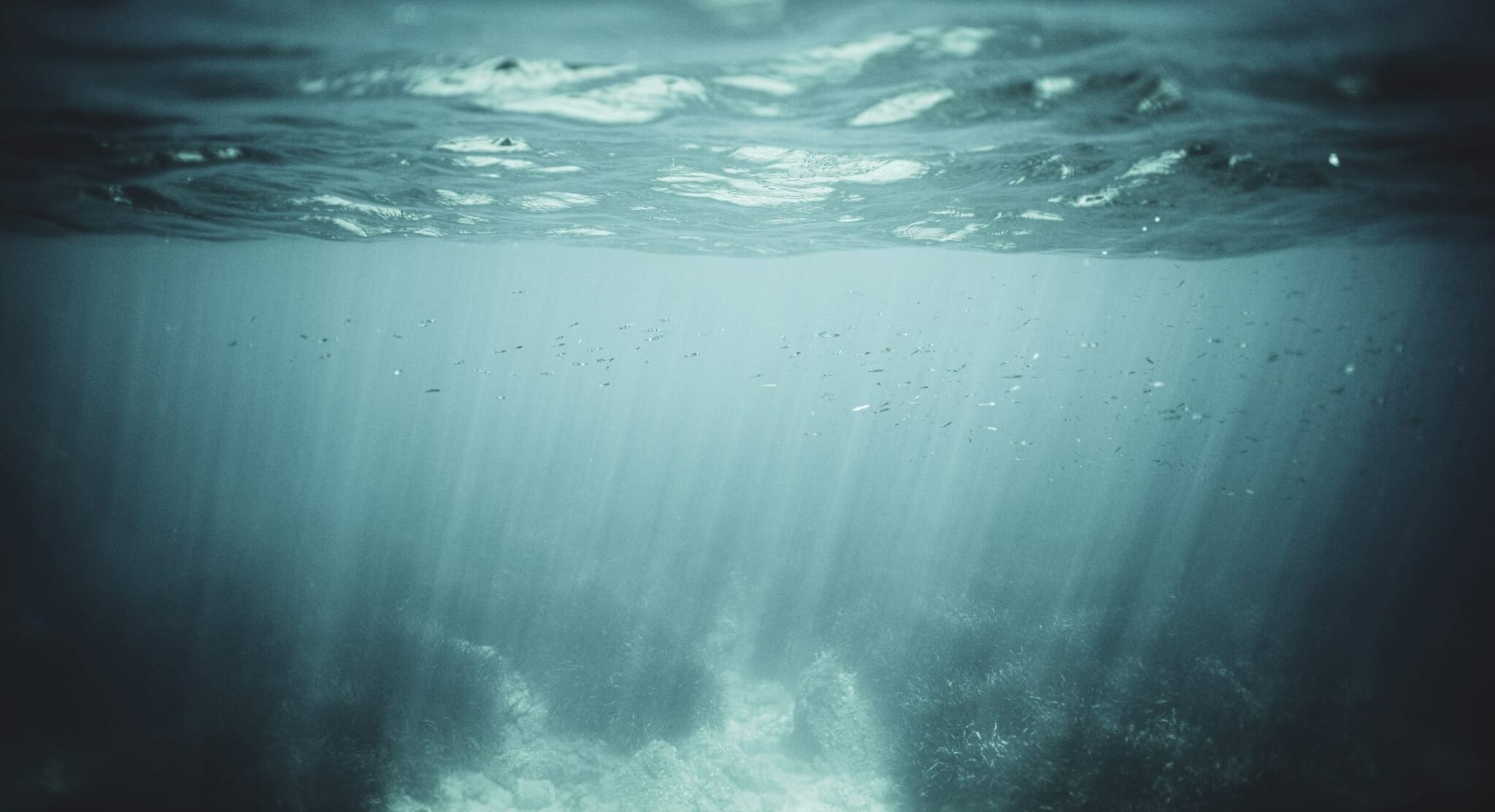
Regulatory frameworks for deep-sea mining (DSM) treat the ocean as a space to be measured, governed and economically valued. DSM proponents claim that this form of mining avoids many of the negative impacts associated with terrestrial extraction (such as displacement or land use changes), working from an assumption that deep seas are largely inert or empty spaces.
What such frameworks, and proponents’ views, fail to accommodate is an ocean that is already inhabited. Not merely by ecosystems, but in many Indigenous contexts by ancestors, by spirits and by God, and thus by moral obligations that predate any regulatory regime. This is not a problem of cultural inclusion. It is an ontological conflict. It is a profound disagreement over what kind of being the ocean is before it is rendered legible in regulatory systems.
The distinction matters. DSM governance frameworks can include cultural representatives, require community consultation or mandate Indigenous participation — and yet still operate with a fundamentally different account of what the ocean is. Across a range of Pacific religious and ethical traditions, articulated in diverse and sometimes contested ways, responsibility to the sea is not just responsibility for the ocean, as a resource to be managed. It is responsibility to the ocean, as a morally inhabited world that humans enter already indebted.
In October 2025, this tension became visible at a climate talanoa in Sydney. Uniting Church leaders welcomed Climate Minister Chris Bowen and Pacific counterparts with a clear message: harm to the ocean is not merely a policy failure, but a moral and spiritual violation. Drawing on Pasifika theology, church leaders called for climate leadership grounded in care and justice. There are other examples. Also in 2025, Methodist leader Reverend James Bhagwan condemned proposed seabed mining leases in American Samoa, framing DSM as a moral and spiritual violation rather than a neutral technological option, invoking a sacred responsibility understood by many Pacific people and churches for and to the ocean.
This framing was sharpened at a recent workshop at Macquarie University on DSM and Enchanted Ecologies. Prominent Pacific theologian Reverend Dr Cliff Bird and regional scholars, including the authors of this blog, reflected on the ways the unknowability of the seabed mirrors the mystery at the heart of encounters with God, ancestors and spirits. What emerged from this workshop is a concept we term spiritual responsibility: the obligation that arises from living within a world populated by humans, ancestors, spirits, non-human beings and God, bound together in enduring relation.
Different Pacific theological traditions develop this notion through several overlapping concepts. Reweaving the Ecological Mat (REM) advances a relational theology that decentres human dominance and situates responsibility within an ecological Aiga (household) in which land, sea and air are not resources, but storied, sacred spaces shaped by ancestral presence and obligation. Practices such as tabu and rahui, which set aside areas for regeneration, exemplify spiritual responsibility as restraint rather than mastery. Concepts such as vanua or fonua name the inseparability of people, place and spiritual power, though they are interpreted and articulated differently across communities, denominations and islands.
Within such cosmologies, responsibility is prior to choice. People do not decide whether to be accountable to land or sea in the way one might adopt a policy position; accountability is a condition of their being. Ancestors are not merely remembered; they remain morally present. Spirits are not symbolic; they are attached to lands and waters, such that environmental harm becomes a form of relational violation. God too, within many Pacific Christian theologies, is not a distant arbiter but an active participant in sustaining the moral coherence of the world.
This is not an argument that Christian theology should be embedded in environmental governance everywhere, nor that other belief systems are less deserving of recognition. Rather, it reflects the specific historical and institutional context of DSM governance in the Pacific, where Christian churches remain among the most influential moral, social and political institutions. In many Pacific states, churches operate as key interlocutors between communities and governments, shape public ethics and articulate moral limits to development in ways that carry political weight. Elsewhere, different religious or ethical traditions may warrant similar attention. The claim here is context-specific rather than universal: in Pacific DSM governance, Christian theologies are already operative in shaping public reasoning about the ocean, whether or not governance regimes acknowledge their role.
We are also not trying to imply that Pacific states, communities and church positions on DSM are uniform or politically innocent. Rather, we draw attention to the strong and growing theological current across the region that treats DSM as categorically different from the regulatory calculus that governs it.
Considering all this, DSM governance bodies should move beyond technical regulation and risk management as the sole basis for decision-making. This does not mean substituting spiritual considerations for scientific expertise. It means recognising that these are not competing ways of thinking about the same thing — they are different accounts of what the ocean is, and what obligations follow from that. Again, we emphasise the importance of the distinction.
Following through on this would require institutional changes, with procedural consequences. These could include establishing advisory mechanisms that integrate Pacific theological and cosmological traditions as legitimate sources of ethical authority, rather than merely as “cultural context”, requiring ethical and spiritual assessments to run alongside environmental impact assessments, and explicitly identifying where regulatory categories fail to capture spiritual responsibilities. Findings of ethical indeterminacy, where a regulatory or governance mechanism cannot satisfactorily adjudicate moral claims, should be considered a basis for delaying, reshaping or stopping licensing processes, rather than, as at present, merely generating “social licence” risks to be managed.
Such arrangements would have analogues in existing mechanisms — for example, regimes that allow resource projects to be constrained or prohibited on the grounds of Indigenous spiritual significance — while recognising that Pacific theological claims often extend beyond site-specific heritage to oceanic relational worlds. These changes would require sustained, targeted investment in Pacific-led theological and ethical capacity building within governance institutions.
This points to forms of support that are both feasible and, depending on the specifics, appropriate for governments, regional organisations, universities or churches. Such investment could include:
- support for interdisciplinary training programs linking Pacific theologians, ethicists, scientists and policymakers
- resourcing for Pacific universities and theological colleges to develop applied expertise in environmental and governance ethics
- funding for governance institutions to employ or consult specialists capable of translating theological and cosmological claims into decision-relevant ethical analysis without instrumentalising them
- additional support for the existing role of Pacific churches in functioning as intermediaries between communities and states.
International churches need to contribute, but secular and donor agencies should also consider doing so insofar as the focus is on environmental governance reform rather than religious advocacy.
In the end, Pacific theologies are not local barriers to global governance. They are sources of insight with global relevance, especially as new technologies and environmental crises force urgent questions about how humans can live responsibly within an interconnected and morally consequential Earth.
If the ocean is sacred, then governing deep-sea mining is not simply a technical task. It is a moral reckoning with how we choose to live in a world already shaped by spiritual responsibility.
