

© Brandon Patris
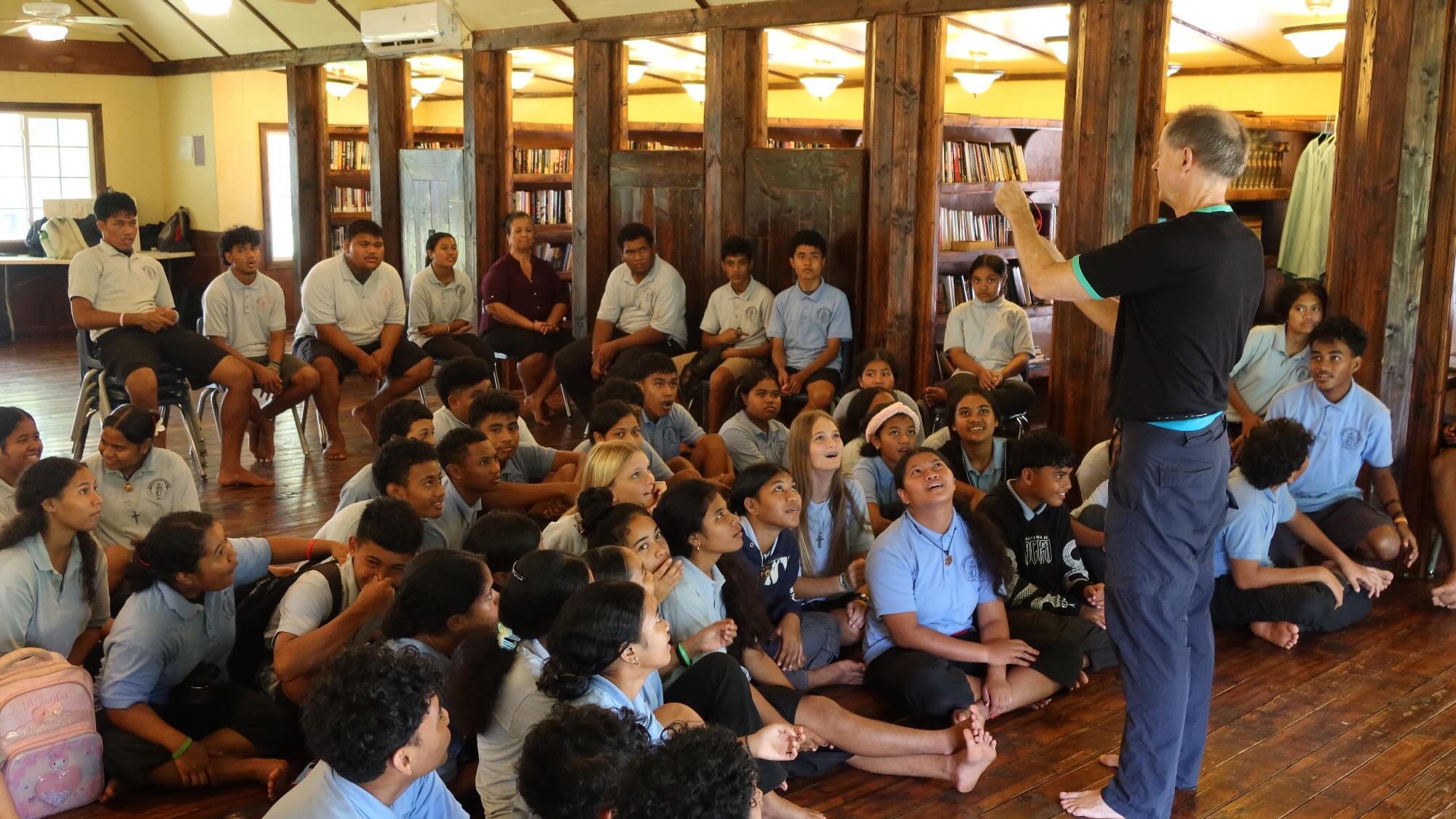
University of Bremen physics professor Justus Notholt travels to Palau for research — and taught at a high school while there.
Research / University & Society
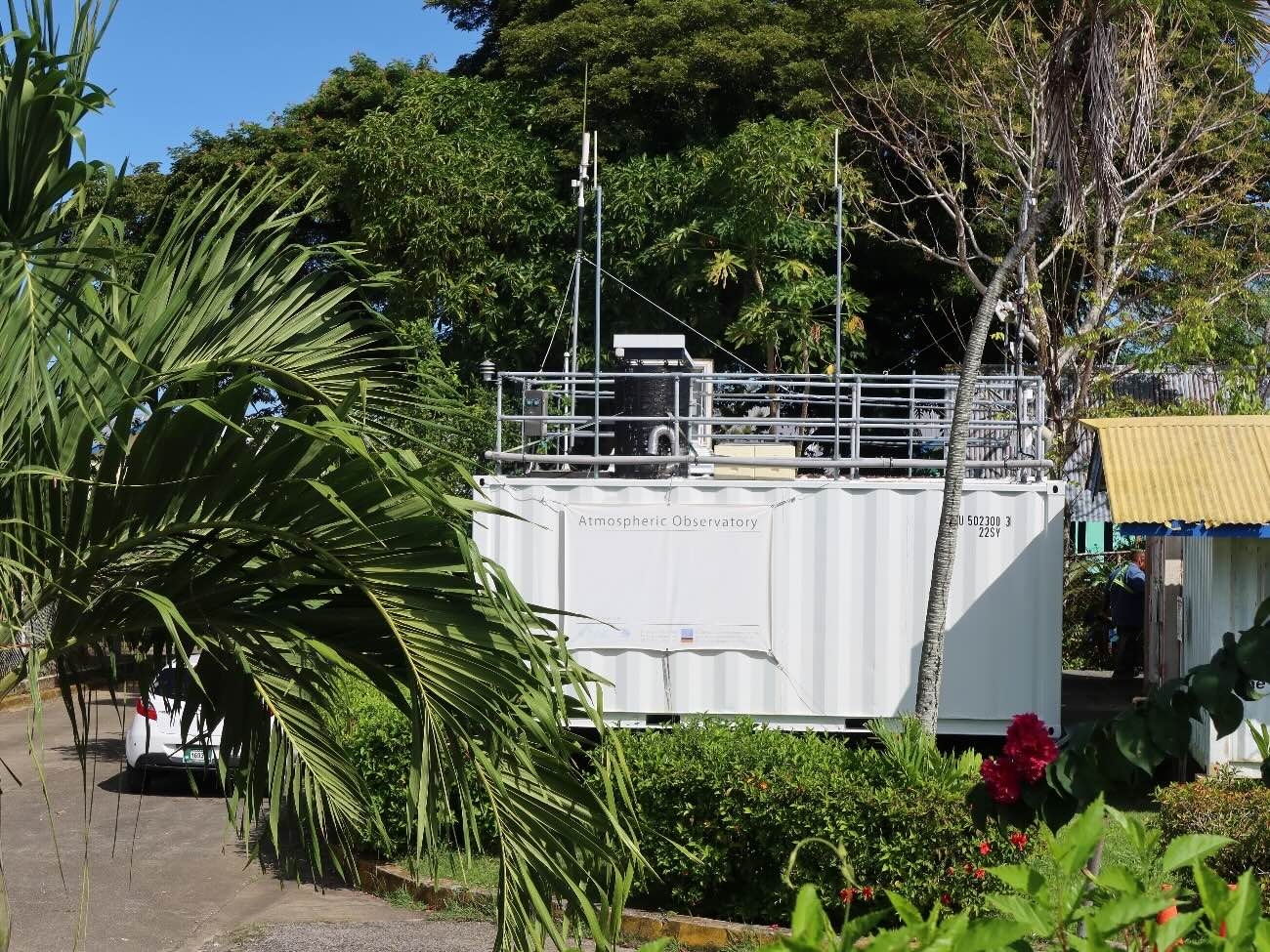
University of Bremen physics professor Justus Notholt has made six visits to Palau, an island nation 1,000 km east of the Philippines. It is home to an atmospheric measuring station established ten years ago by the University of Bremen and the Alfred Wegener Institute as part of the EU project StratoClim. He has just returned from another visit. Although his focus was primarily on research, he didn’t pass up the chance to teach physics there.
Professor Notholt, why were you in Palau?
The western Pacific Ocean is the warmest in the world, with surface temperatures of 30 degrees Celsius. As a result, the air here is highly energized and can rise all the way into the stratosphere, the layer of air between 15 and 50 km altitude. From there, the air slowly makes its way to the two polar regions, where it sinks again. The composition of the air in the West Pacific therefore plays a key role in shaping the chemical composition of the global stratosphere. Measurements of the lower atmosphere in this region are essential for understanding upper-atmosphere processes across the entire planet.
Do researchers have to travel there often? That seems like quite a hassle.
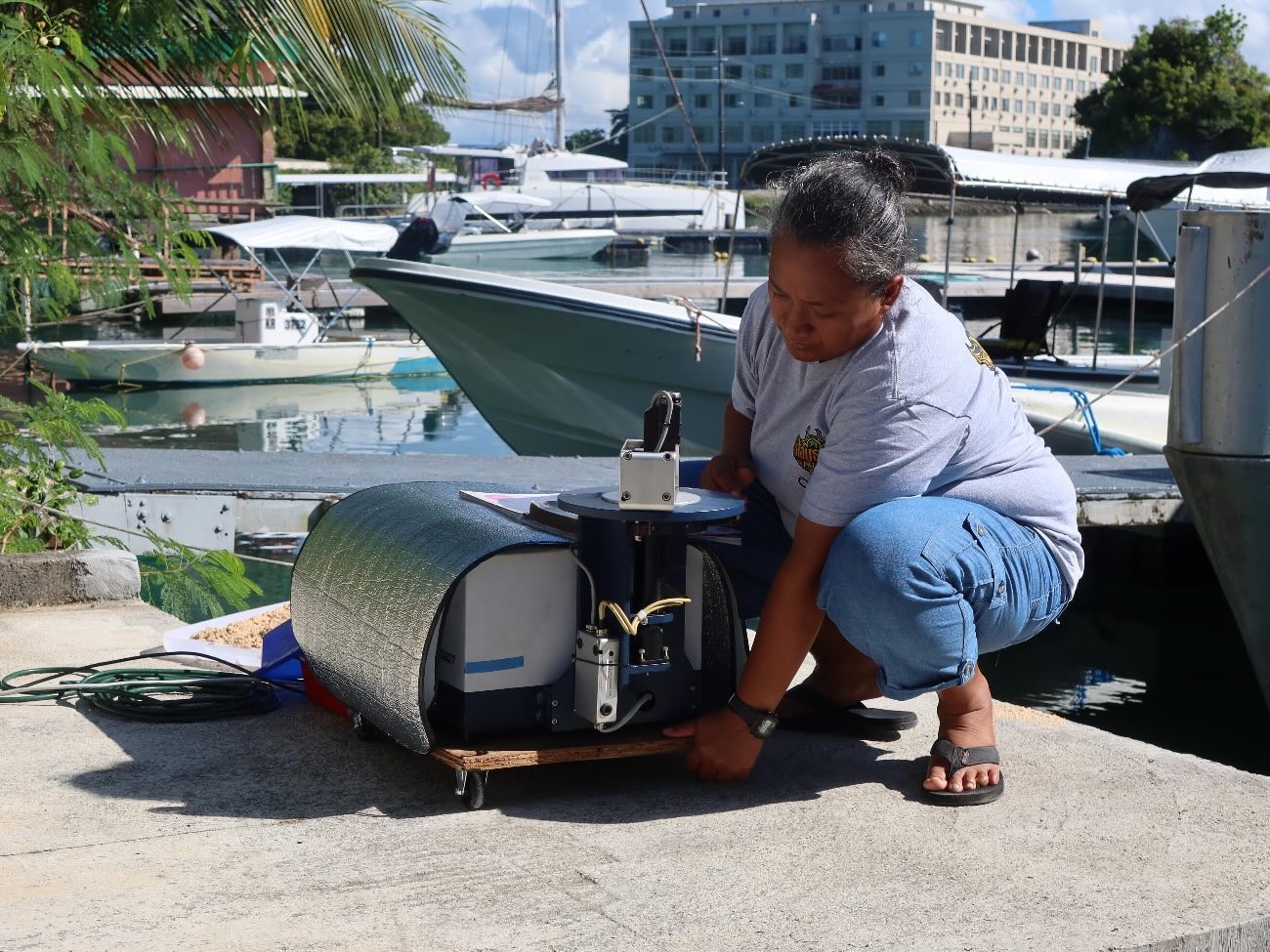
Most measurements can be conducted remotely from Bremen and Potsdam. However, once a year, researchers and technicians from AWI and the University of Bremen travel to Palau to repair and calibrate equipment and conduct special measurements that cannot be performed remotely. Almost all instruments are housed in two air-conditioned containers on the campus of Palau Community College (PCC). Additional instruments are operated in collaboration with the Coral Reef Research Center (CRRF). Long-standing partnerships with PCC, Palau High School (PHS), and CRRF include presentations and tours.
© Justus Notholt/ Universität Bremen
What exactly is the research hoping to discover?
In recent years, we have focused on three main areas. First, we wanted to understand exactly how air masses rise from the lower to the upper atmosphere. We analyzed the AWI’s lidar measurements in Palau and used mathematical modeling to interpret them. Lidar measurements send short pulses of light into the atmosphere and then measure the reflected signal. That provides information about the altitude and frequency of aerosols and clouds. A second focus was on ozone chemistry. The air in Palau is exceptionally clean, perhaps the cleanest on Earth, allowing us to study the diurnal variation of ozone without interference from anthropogenic reactive gases. A third, ongoing focus is on the influence of weather events such as El Niño on CO2 concentrations. Palau is located in a region where El Niño, which triggers extreme global weather events such as droughts and floods, significantly affects CO2 levels in both the ocean and atmosphere. This makes Palau an ideal site for measuring and evaluating the related processes.
© Justus Notholt/ Universität Bremen
You also spent time teaching in classrooms this time.
Yes, that’s true. I taught first at Palau High School, where we presented and discussed physics experiments from the annual science advent calendar we produce in Bremen. These experiments cover mechanics, optics, and electricity, and are shared on the University of Bremen’s YouTube Channel. The videos are in German and are very popular, with over 4 million views. Some of these experiments are now part of Noel Ryes’ physics lessons at Palau High School. Videos of each experiment have been recorded and posted on Facebook.
Since they were shared on Facebook, these experiments gained widespread visibility in Palau and beyond. Because of this, I was invited to demonstrate them at Yap Catholic High School on the island of Yap (part of the Federated States of Micronesia). In collaboration with physics teacher Perfi Angeli Talaid, these experiments were integrated into physics lessons there as well.
What was your impression? Were your physics lessons well received?
The high schoolers were quite captivated. Both schools have a very high academic standard, comparable to the German secondary school form “Gymnasium.” Because the experiments were shared on Facebook, they reached far beyond the classroom – gaining visibility across Palau and Yap. I donated the materials to Palau High School so local teachers can continue to use them in the future. These activities helped increase the overall visibility of German research in Palau, and the University of Bremen’s in particular. Bremen wasn’t entirely unknown there, though. Years back, several PCC students had attended a conference in Bremen organized by the Leibniz Centre for Tropical Marine Research (ZMT).
