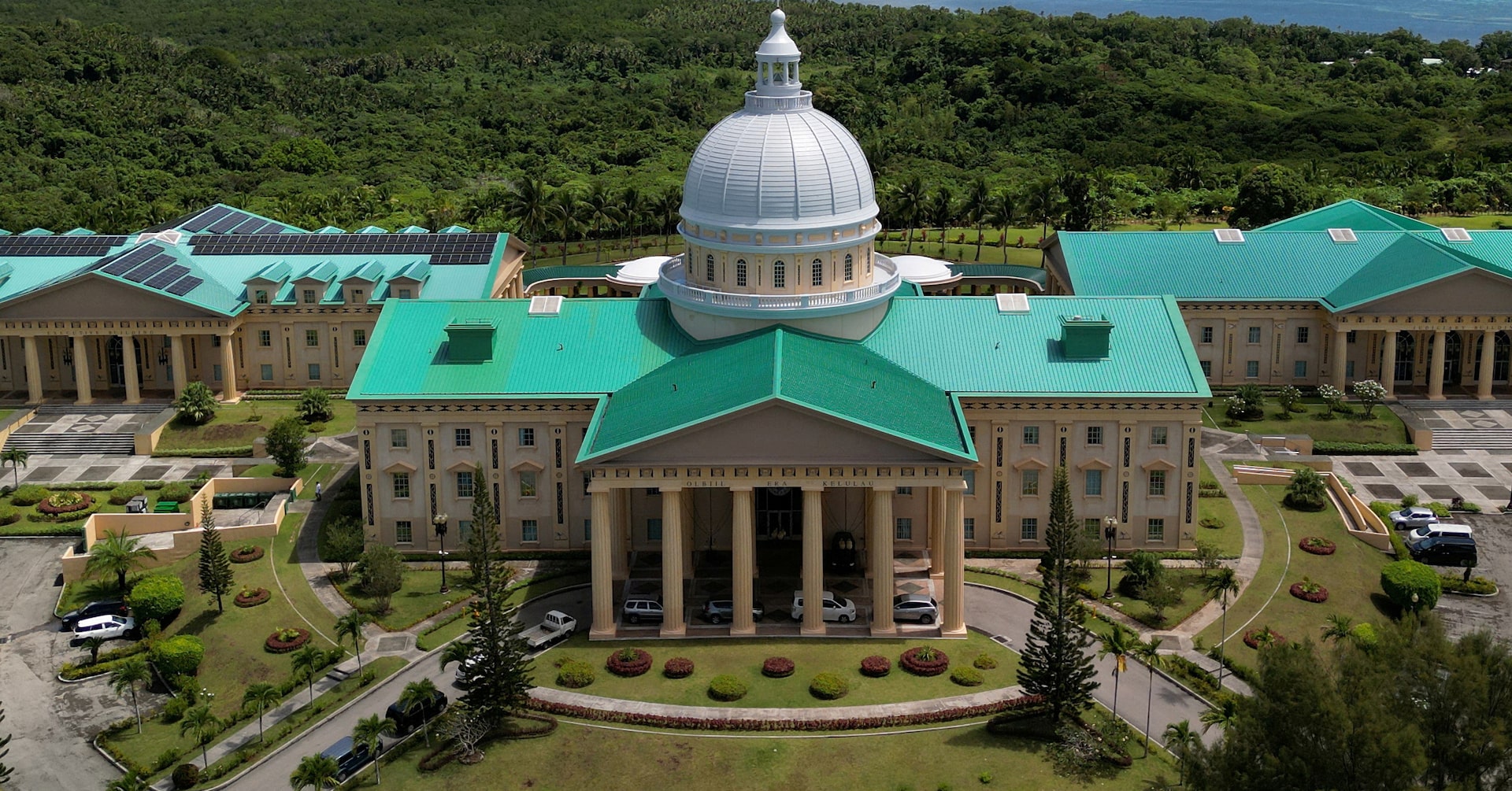
WASHINGTON, Dec 23 (Reuters) – The U.S. on Tuesday said Deputy Secretary of State Christopher Landau spoke to Palau President Surangel Whipps about transferring third-country nationals to the Pacific Island nation, even after its lawmakers rejected a previous request from Washington on the matter.
President Donald Trump’s immigration policies, including his administration’s deportation drive, have been broadly condemned by human rights advocates on concerns about due process. The Trump administration has also sent hundreds of people to third countries to which they have no ties, a tactic that was rarely used in the past.
Sign up here.
Trump has said the measures are aimed at improving domestic security.
“The leaders discussed a new U.S.-Palau Memorandum of Understanding regarding the transfer of third-country nationals with no known criminal histories,” the State Department said in a statement after Tuesday’s call.
In late July, Palau’s Congress said it “cannot accept” a U.S. proposal for it to accept asylum seekers from other countries.
Palau, with a population of 17,000, has a compact of free association with the U.S., which provides economic assistance in return for allowing American military access to its territory.
Palau is not a signatory to the 1951 UN Refugee Convention.
U.S. Catholic bishops have condemned Washington’s immigration enforcement activities and in October, Pope Leo XIV lamented the mistreatment of immigrants.
Last week, a federal judge signaled a willingness to again rule that the Trump administration cannot swiftly deport migrants to countries other than their own without providing meaningful notice and an opportunity for them to raise fears of persecution or torture if they are sent there.
Reporting by Kanishka Singh in Washington; Editing by Thomas Derpinghaus
Kanishka Singh is a breaking news reporter for Reuters in Washington DC, who primarily covers US politics and national affairs in his current role. His past breaking news coverage has spanned across a range of topics like the Black Lives Matter movement; the US elections; the 2021 Capitol riots and their follow up probes; the Brexit deal; US-China trade tensions; the NATO withdrawal from Afghanistan; the COVID-19 pandemic; and a 2019 Supreme Court verdict on a religious dispute site in his native India.