


Overview:
As Pacific leaders gather in Port Moresby for the Sixth Pacific Regional Energy and Transport Ministers Meeting, a clear message is emerging: the region’s greatest challenge is no longer ideas, but delivery. From rising fuel costs to fragile supply chains, island nations are shifting focus toward scaling proven solutions that can strengthen resilience across the Pacific.
By Ngeldei Tulop
In the long stretches of ocean that separate island communities, the Pacific reveals its realities with quiet consistency. Distance is not just geography—it is cost, time, and vulnerability. It is reflected in the price of a single shipment of fuel crossing thousands of kilometres, and in the delays that ripple outward until they begin to affect hospitals, schools, transport routes, and household budgets. Across island nations of the Pacific, energy and transport are not abstract policy discussions. They are daily conditions that determine whether communities remain connected or drift into isolation, whether systems hold steady or slip into disruption.
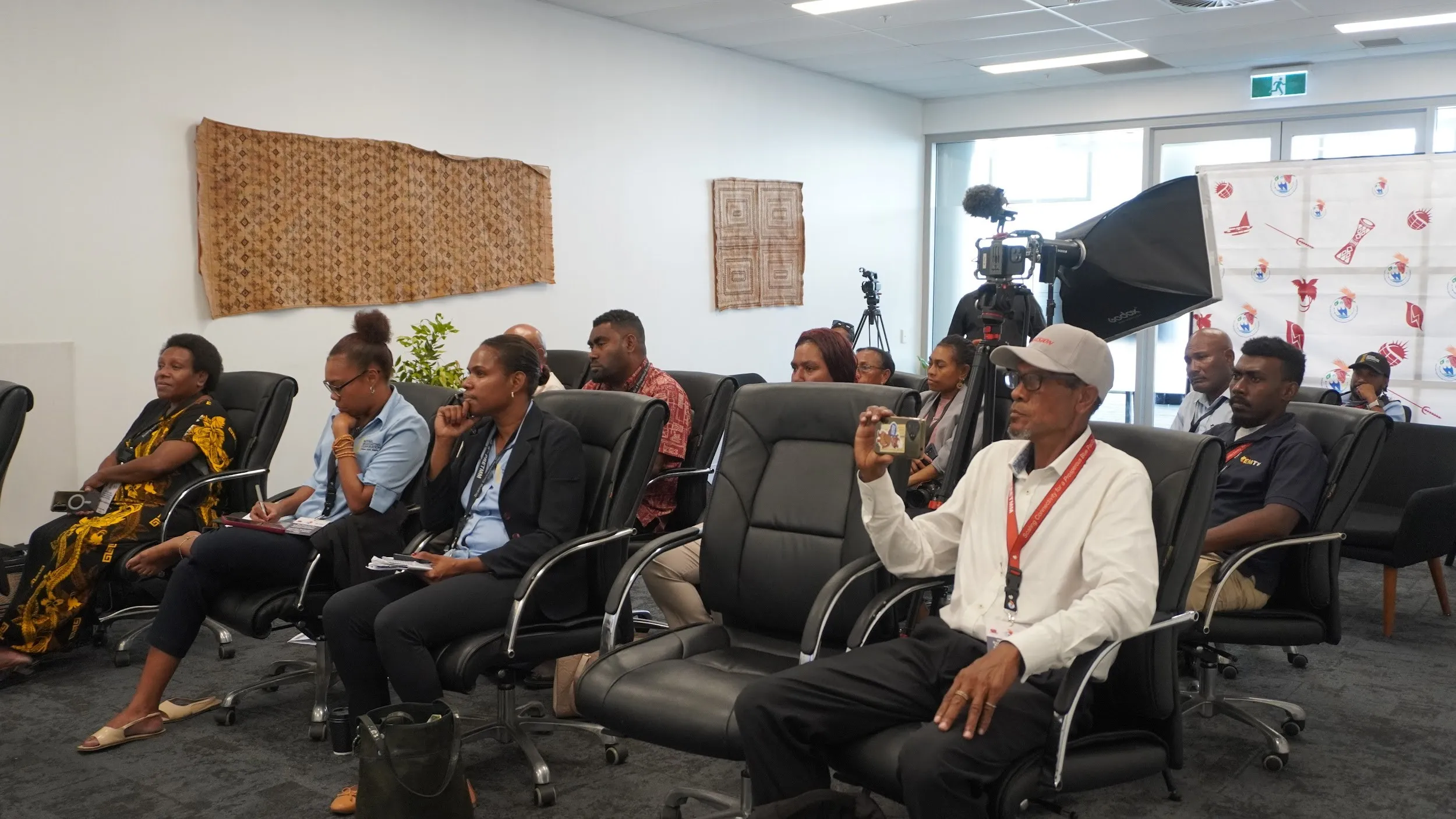
This reality forms the backdrop to the Sixth Pacific Regional Energy and Transport Ministers Meeting taking place in Port Moresby, where discussions are shifting away from broad ambition and toward the harder question of delivery. The tone reflects a region that has heard enough about possibilities and is now focused on what can actually be built, repeated, and sustained in practice.
A recurring theme throughout the meeting is that the Pacific does not lack ideas. It lacks scale. Many solutions already exist and have been tested successfully in individual countries and communities, yet they remain fragmented. What works in one place is often not adapted or expanded to others, leaving progress uneven across the region.
Speakers have highlighted a shift in focus from action to delivery, emphasizing that attention is now turning toward identifying what already works and understanding how those solutions can be replicated across borders. The goal is to turn isolated success stories into shared regional systems that can strengthen resilience and efficiency across multiple island nations.
This approach also challenges a long-standing assumption in regional development that innovation must come from outside. In reality, much of the Pacific’s progress is already emerging from within its own environments, shaped by geography, necessity, and limited resources that demand practical solutions.
Energy remains central to these discussions, particularly the reliance on imported fuels and the burden of high costs on both governments and households. Geographic isolation further increases the expense of transport and supply chains, while limited infrastructure restricts the expansion of reliable energy systems. At the same time, heavy dependence on imports leaves economies exposed to global price fluctuations, making long-term planning more difficult.
Alongside energy concerns, waste management is becoming an increasingly urgent issue across island communities where space is limited and consumption continues to grow. Despite this, the relationship between waste and energy remains underexplored at the regional level, particularly through waste-to-energy approaches that could address multiple challenges at once.
Ministers, heads of delegations, senior officials, and regional leaders have pointed out that while renewable energy such as solar power continues to receive significant attention, other practical solutions are often overlooked. Waste-to-energy, in particular, has been raised as an area that requires more serious consideration in terms of financing, scalability, and long-term viability across different island contexts.
The meeting in Port Moresby is attempting to close the gap between discussion and implementation by focusing on solutions that already exist but have not yet been expanded regionally. Rather than introducing entirely new concepts, the emphasis is on identifying what has worked locally and understanding why those successes have not yet been replicated more widely.
For younger generations across the Pacific, these conversations carry significant weight. Energy affordability, transport access, and infrastructure resilience are not abstract policy matters. They directly shape livelihoods, mobility, and future opportunity in a region defined by both vulnerability and connection.
Despite its frequent characterization, the Pacific is not defined by smallness. It is vast, interconnected, and shaped by shared challenges that extend across national boundaries. The ocean itself has always reflected this reality, linking rather than separating its islands.
The central question now is whether regional systems can evolve quickly enough to match what the ocean has long made clear about how the Pacific functions as a whole.
