


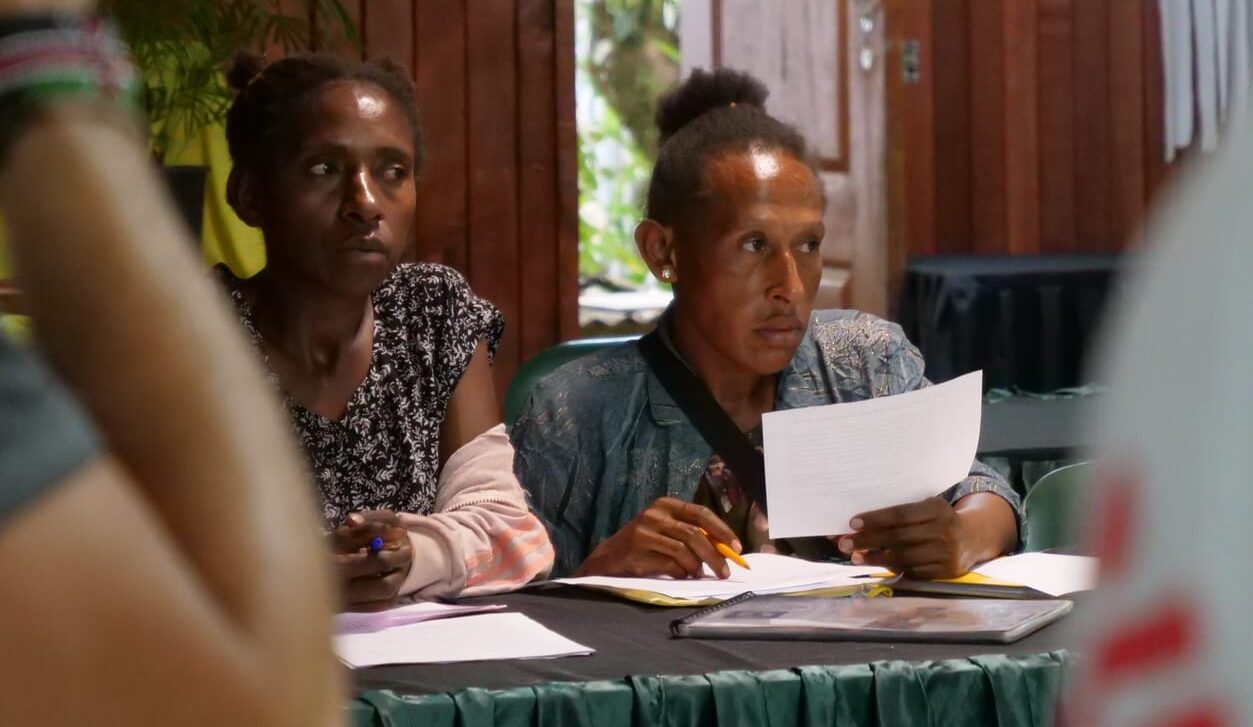
This article draws on perspectives the author gathered during field visits in Jiwaka Province, Papua New Guinea, including via direct observation, interviews and discussions with MSF staff, trained village health volunteers and survivors of sorcery accusation-related violence and gender-based violence.
“My whole village turned against me after a single accusation. I ran for my life. I cannot go home. I cannot reclaim my land. If I go back, they will kill me.”
In PNG’s Highlands, that is not a rare horror. It is a lived reality for women caught in the grip of sorcery accusation-related violence, where the attack itself is often only the beginning. As for survivors of domestic abuse and sexual violence in the area, after the violence comes another fight: finding care quickly, finding it safely, and finding it before fear, stigma and silence close in.
The scale of the crisis is stark. PNG’s latest Demographic and Health Survey (2016-2018) found that 56% of women aged 15 to 49 had experienced physical violence, while 28% had experienced sexual violence. Among ever-married women, 63% had experienced emotional, physical or sexual violence by a spouse. Even then, many survivors remain silent. 39% of women who had experienced physical or sexual violence had neither sought help nor told anyone. In the Highlands, the burden is even heavier, with 31.8% of women aged 15 to 49 reporting sexual violence.
Sorcery accusation-related violence adds another layer of terror. A 2024 paper by the PNG National Research Institute recorded 1,039 cases affecting 1,554 people across four provinces between 2016 and 2020. Jiwaka Province is considered one of the country’s four hotspots. The real toll is likely far higher. Much of this violence never reaches formal reporting systems. Many of those targeted are women and girls.
In Jiwaka, Médecins Sans Frontières (MSF) works alongside the Provincial Health Authority to expand access to safe, confidential, respectful and free care for survivors of all forms of violence, and to strengthen essential health services across the province. To strengthen the quality of care and improve community access to essential services, teams assessed health facilities across all three districts to identify gaps in service delivery and priority areas for support. Based on these findings, MSF delivered several training sessions in nine facilities and trained 164 health workers from September to December 2025, aiming to improve clinical capacity and ensure safer, more consistent care. To increase public awareness and help communities better navigate available services, teams also conducted 245 health talk sessions in Anglip-South Waghi District communities, including Minj Health Centre, reaching 1,998 people while village health volunteers then led nearly 150 community sessions reaching 2,239 people. In September 2025, the Family Support Centre at Minj began operating with MSF support, providing survivors with a clearer path from first medical care to follow-up appointments.
In cases of rape or severe assault, time matters. In the first 72 hours, a survivor may need treatment for injuries, emergency contraception, HIV prevention, protection from infection and urgent psychosocial support. That is why the Family Support Centre matters. It is meant to make those first hours count and reduce the risk that survivors are lost between services.
“A referral pathway is not a chart on a wall,” said Rachel Wehrung, MSF project coordinator. “It is a promise that a survivor will not be sent from place to place, forced to repeat her story, relive her trauma, and face the same backlash again. If that promise is broken, the pathway becomes another form of harm.”
A referral pathway, in plain terms, is whether help actually leads somewhere. Whether the next door opens. Whether a woman in crisis meets someone trained, discreet and ready to act, or is left to carry her trauma from office to office until exhaustion, fear or shame takes over.
In Jiwaka, that first link is often not a doctor. It is someone from the community.
“I became a village health volunteer because I have seen what violence does to our sisters and mothers,” said Yen, a local volunteer. “Sexual violence is common here. Men rape young women. Violence also happens inside homes, where men beat women instead of respecting them. People like me must step up so survivors can get treatment. I want to help my community.”
That local role matters because access in the Highlands is brutal in its own quiet way. Some communities are days from the nearest clinic. Roads are limited. Transport is costly or unavailable. Survivors may fear retaliation, gossip, blame or exposure long before they fear a medical diagnosis. By the time a woman reaches formal care, she may already have crossed distance, family pressure and community scrutiny just to get there.
“Getting trained helped me because I see domestic violence everywhere,” said Joice, a woman from the Highlands who took part in MSF village health volunteer training. “Now I can speak to my community more openly. Sexual violence is common here. Many men beat and abuse their wives. That causes suffering, illness and hardship. Violence is a major problem in our communities.”
The work in Jiwaka is therefore not only about treatment. It is about trust. A survivor may need care for injuries, emergency support after rape, counselling, police referral, legal assistance or a safe place to stay. None of that begins if seeking help feels dangerous.
“Violence thrives in silence, stigma and impunity,” said Robert Keango, the head of mission for MSF in PNG. “Confidential care is not optional. It protects survivors. If a woman believes seeking help will expose her, she will not come. If she does come and confidentiality fails, we may place her in even greater danger.”
“There is no neat ending to this story, because there is no neat reality behind it. One project cannot erase entrenched violence, fear or impunity. But we can try and make survival less dependent on luck and care more reachable and trusted. Where one accusation can strip a woman of her home, her safety and her future, that can mean a lot,” Keango adds.
