


- Nearly every major party agrees that costs of living and economic pressure are hurting Pacific families the most – but they disagree on how to fix it.
- Major differences exist on immigration, criminal justice approaches and whether foreign aid should be redirected to domestic services.
- RNZ Pacific put six key questions to the main political parties so Pasifika voters can compare policies before casting their ballot.
Early voting has opened for the general election in Aotearoa New Zealand.
New Zealand uses MMP, mixed member proportional representation. Enrolled voters can have their say on the party vote – the party they want to win the election and run the next government – and their local electorate vote, for the candidate they want to represent their constituency in parliament.
However, new enrolments have closed – same-day enrolment on voting day is no longer permitted.
RNZ Pacific asked all the main political parties where they stand on Pasifika issues, with a 100-word limit on their responses to each of the six questions. Here’s what they said.
How does your party plan to respond to cost-of-living pressures in Aotearoa?
d3sign
ACT: ACT will cut wasteful government spending, balance the books without new taxes, and reduce unnecessary costs on households and businesses.
We will enable competition in both the supermarket industry and electricity by removing red-tape and regulation that prevents businesses competing, enabling lower prices.
We will lower the carbon tax and return net ETS auction revenue to New Zealanders through a Carbon Tax Refund.
Green Party: Aotearoa has enough for all of us to live a good life.
The Green Party is focussed on ensuring everyone can have good jobs, afford their groceries, live in warm homes, and have more time with the people they love.
We will cut household costs by lowering power bills, making public transport free for many people and capping adult fares at $2, and taking action to make nutritious food more affordable. We will fund this by ensuring the wealthiest individuals and largest corporations contribute their fair share, while giving tax cuts to 96 percent of New Zealanders.
Labour: Labour’s number one focus at this election is the cost of living – it is what is hurting our Pacific families the most.
We will take action to get the cost of living under control.
Labour will: reinstate pay equity in the first 100 days and give an immediate pay rise to care and support workers, which will back the many hard-working Pacific women in the job to get ahead; introduce three free doctor’s visits to ensure Pacific families are getting the care they need, when they need it; cap public transport fares to $20 a week in Auckland, Wellington and [cut-off as per 100-word limit]
National: Did not respond to RNZ Pacific.
However, the party has previously unveiled a fiscal plan that hints at tax cuts for voters, but not until the books are back in surplus.
The party has also promised it will push for a break up of supermarket giant Foodstuffs, in a bid to drive down grocery prices and an energy plan to tackle what’s driving up power bills.
It is also campaigning on compulsory KiwiSaver, changes to paid parental leave, lower weekly student loan repayments and to help more people buy their first home by expanding access to the government’s low-deposit scheme. Read RNZ’s full policy guide here.
New Zealand First: Did not respond to RNZ Pacific.
However, the party has previously said it would increase the minimum wage by at least inflation levels every year for the next three years, restrict Superannuation to citizens only from 2029, and give a permanent boost to the Working For Families in-work tax credit.
It also wants to split up the energy gentailers (generators and retailers), saying this policy would ensure energy gentailers could “no longer control both the power and the price”. Read RNZ’s full policy guide here.
Opportunity: Bringing down the cost of living is a bottom line for us in any coalition or confidence-and-supply negotiations.
We would empower the Commerce Commission to intervene in sectors such as supermarkets, electricity and banking to ensure greater competition and fairer prices.
We would also accelerate the transition to clean, renewable energy to reduce our reliance on imported fossil fuels and ease pressure on household budgets at the petrol pump. In the longer term, we support a universal Citizen’s Income to provide greater financial security as Aotearoa navigates the disruptions of artificial intelligence and climate change.
Te Pāti Māori: Te Pāti Māori will transform and rebalance the tax system to ensure that those in our whānau who work the hardest, often in multiple jobs, keep more of what they earn in their own pockets.
Our tax proposals target wealth rather than work in order to ensure that Aotearoa remains a place where our young people can actually live and not be forced to leave our shores in search of futures elsewhere.
What is your position on visa-free access to Aotearoa for Pacific Island nationals?

123RF
ACT: ACT is open to trialling easier access while maintaining effective border controls. ACT has publicly been open to a one-year visa-free trial for Samoa, with continuation conditional on visitors respecting the rules.
We have not committed to unrestricted visa-free access across the Pacific, however, if this proves to be beneficial this could be expanded.
Green Party: The Greens have long supported visa-free access to Aotearoa for people from Pacific Islands. In early 2025, we launched a petition calling on the Government to extend visa-free travel to Pacific Island nationals.
Pacific whānau should not face higher costs, longer delays or greater bureaucratic barriers than travellers from many wealthier countries. Aotearoa is part of the Pacific family, with deep whakapapa, cultural and community connections across Te Moana-nui-a-Kiwa. A Pacific visa waiver would strengthen those relationships and make it easier for families to connect.
Labour: Labour will make travel to New Zealand easier and cheaper for Pacific citizens by expanding visa-waiver access to them.
National: Did not respond to RNZ Pacific. National would not be drawn on its position when questioned last month, saying the party would announce its immigration policy in due course.
It has since released its 100-day plan which includes implementing changes at Immigration NZ to prioritise and expedite visas for partners of New Zealand citizens, and introducing legislation to get tough on overseas student loan defaulters.
New Zealand First: Did not respond to RNZ Pacific.
However, in February, Winston Peters accepted a petition by Samoan activist Arthur Anae calling for people from six Pacific nations – Fiji, Samoa, Solomon Islands, Tonga, Tuvalu, and Vanuatu – to be issued a short-term visa on arrival in New Zealand. Peters said last month that it “possibly could happen in the future”.
Opportunity: Opportunity does not have a formal position on visa-free access for Pacific Island nationals.
However, we recognise the significant challenges faced by Pacific families in Aotearoa when loved ones need to travel urgently to attend a funeral or visit a terminally ill family member.
We are committed to listening to New Zealand’s Pasifika communities and Pacific governments, and working constructively with other political parties to explore solutions that address these concerns with compassion and fairness.
Te Pāti Māori: Te Pāti Māori stands in solidarity with our sibling islands across the Pacific family. We support amnesty and justice for our Pacific cousins whose elders came to Aotearoa and were mistreated upon arrival.
The legacy of the Dawn Raids must not be forgotten. As ocean relatives, Te Pāti Māori believes that justice lies in greater unity across the Pacific through free and open access between our peoples and islands.
Te Pāti Māori supports visa-free access to Aotearoa for Pacific Island nationals.
Aotearoa is a Pacific country. We share whakapapa and it makes no sense to deny other Pacific peoples the right to remain connected with their ocean kin.
What is your position on aid to the Pacific Islands?

A NZ Airforce Hercules drops aid in Tonga after Cyclone Gita
RNZ Pacific / Koro Vaka’uta
ACT: ACT recognises the importance of a stable, prosperous Pacific and helping our neighbours when disaster strikes. However, aid must demonstrate results and value for taxpayers.
However, aid must demonstrate results and value for taxpayers. ACT would reduce overall foreign aid to 2017 levels, while protecting aid to the Pacific and support for Ukraine.
Green Party: The Green Party supports increasing aid to the Pacific, shaped by Pacific priorities. Funding aid to the Pacific is critical for New Zealand’s regional security, economic stability, and shared prosperity.
Our Pacific Peoples spokesperson, Teanau Tuiono, has been part of Pacific delegations throughout this term and seen firsthand the instability caused by the withdrawal of aid by the US.
The Greens are clear that development assistance must serve communities and the public good, not militarisation or extractive commercial interests. Climate finance should recognise that Pacific peoples have contributed little to the climate crisis while facing some of its worst effects.
Labour: Unlike other parties, Labour will not cut our foreign aid budget – instead Labour will progressively increase overseas development assistance towards 0.7 percent of GDP as fiscal conditions allow.
Our foreign aid is a small but important contribution we make as a good global citizen and a good neighbour to our Pacific Island brothers and sisters.
National: Did not respond to RNZ Pacific.
However, health spokesperson Simeon Brown said National wanted to invest a further NZ$604m to help Pharmac fund more new medicines and widen access to those already funded – largely paid for by reducing foreign aid and associated administration costs, “while fully protecting aid to the Pacific”.
That health policy cost came to $823.8m – offset by a $431.2m reduction in foreign aid spending.
The coalition’s Budget 2026 also saw more foreign aid to the Pacific region.
NZ First: Did not respond to RNZ Pacific.
However, leader Winston Peters said National’s foreign aid cut campaign promise “will take us back decades in foreign affairs”.
“We need to double the size of the economy and we cannot do that if we neglect the very markets we need to be in.”
He said the coalition had just restored New Zealand’s influence and relationships around the world.
Peters also travelled to all member countries of the Pacific Islands Forum as foreign minister.
Opportunity: The Pacific is our family, and supporting its wellbeing is both a moral responsibility and in Aotearoa New Zealand’s national interest.
Opportunity will maintain New Zealand’s strong focus on Pacific development assistance, supporting our neighbours to build stable, resilient and prosperous communities.
We believe this support is increasingly important as Pacific nations face the escalating impacts of climate change, transnational drug trafficking and geopolitical competition.
We want to work in partnership with Pacific nations to address these challenges and support their long-term self-determination.
Te Pāti Māori: Te Pāti Māori is a staunch supporter of unity across the Pacific family, including on the matter of military neutrality and the Blue Pacific Ocean of Peace Declaration.
Te Pāti Māori also acknowledges concerns by our kin that climate change presents an existential threat to all Pacific peoples.
Te Pāti Māori wholeheartedly supports aid for the Pacific. We must continue to work together in the spirit of shared kinship to realise our shared aspirations and to solve the strategic risks and challenges of our time.
Do you have a plan on dealing with overstayers from the Pacific, and if so, what is it?
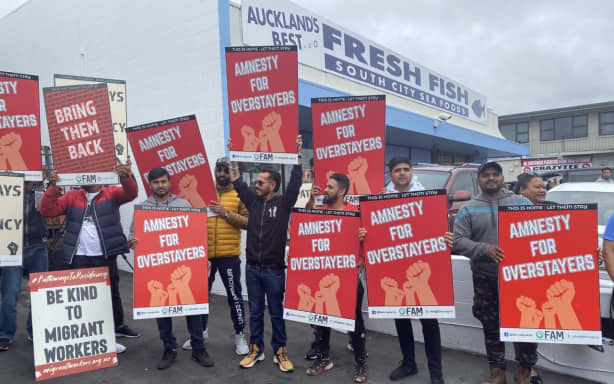
A public meeting that included government ministers and community leaders was called on 6 May 2023 following an incident the previous week that was reminiscent of the Dawn Raids of the 1970s.
RNZ Pacific / Lydia Lewis
ACT: ACT’s approach applies to overstayers from every country.
We will establish a dedicated enforcement unit within Immigration New Zealand, require platform employers to verify and report work rights, and remove accreditation from employers who facilitate overstaying.
Green Party: All migrants should be treated with dignity. Our plan is a fair, broad and accessible amnesty providing pathways to residency for overstayers who have made their lives in Aotearoa.
People without valid visas are often part of our families, churches, workplaces and communities, yet their status can leave them vulnerable to exploitation and family separation.
We would end discriminatory enforcement practices, ensure people can obtain independent advice, and reform temporary visas so fewer people fall out of status.
Labour: There are already systems in place to manage visa overstayers, and we expect those systems to continue to be applied fairly and appropriately.
National: Did not respond to RNZ Pacific.
However, at a community meeting in Auckland, National’s Cameron Brewer said National did not plan to change the settings regarding overstayers or an amnesty, but an ability existed for people to advocate on an overstayer’s behalf to apply for an exemption.
NZ First: Did not respond to RNZ Pacific.
However, New Zealand First has previously said it will offer a two-year clemency period for Pacific Islanders who overstay their visas.
The 24-month period would be “to facilitate any Pacific overstayer to apply to remain in the country legally on a valid visa”, and those who failed to do so would be deported after the period lapsed, “permanently ineligible to apply for any visa in the future, due to their heightened risk of reoffending”.
Opportunity: Opportunity does not have a formal policy on Pacific overstayers, but we recognise the complexity and human impact of this issue.
We support a considered, cross-party approach involving Immigration New Zealand, Health New Zealand and the Ministry of Education to understand the wider implications.
Crucially, we would listen to Pasifika communities to better understand why people overstay including family circumstances, safety concerns, economic hardship and access to essential services. Through broader community consultation, including models such as Citizens’ Voice, we believe Aotearoa can work towards a fair, compassionate and evidence-based response.
Te Pāti Māori: Te Pāti Māori rejects the targeting of our Pacific whanaunga and migrant communities from beyond the Pacific.
Based on our own Māori experience of colonisation, we reject Western political attitudes that seek to decide who belongs in Aotearoa, a Pacific country, and who does not.
We have supported recent efforts by Teanau Tuiono, and by the late Efeso Collins before them, to provide justice to Pacific Island communities through amnesty.
What are your plans for the Ministry of Pacific Peoples?
Ministry of Pacific Peoples
ACT: ACT would abolish the Ministry for Pacific Peoples as part of creating a smaller, more accountable government. Agencies delivering health, education, housing and other services should be responsible for meeting Pacific peoples’ needs and delivering measurable results.
Green Party: The Green Party supports a strong, properly resourced Ministry for Pacific Peoples.
Decades of underinvestment have weakened the public institutions and collective capability we need to deliver for our communities.
Decisions affecting Pasifika people should be made with communities. The Ministry has an essential role in ensuring Pacific communities shape government decisions and in improving outcomes across housing, health, education, employment and culture.
The Greens are uninterested in treating it as a political football or cutting programmes that directly support Pasifika wellbeing because we are committed to working across government and partnering genuinely with diverse Pacific communities.
Labour: Labour will protect and retain the Ministry of Pacific Peoples given its important contribution to Pacific communities across New Zealand.
National: Did not respond to RNZ Pacific.
However, the coalition government led by National decreased funding for the Ministry for Pacific Peoples (MPP) by nearly NZ$36 million over four years in the 2025 budget, while giving funding towards Pacific programmes including business development and wardens. It cut another $2.8 million from MPP over four years in this year’s Budget.
Pacific Peoples Minister Paul Goldsmith told RNZ earlier this year the government would not consider scrapping the Ministry for the remainder of the term. He saw it as a “centre of expertise” that should be “helping the rest of government deal with those with this community as effectively as possible”.
New Zealand First: Did not respond to RNZ Pacific. See above for coalition government’s MPP actions in the last two Budgets.
Opportunity: Opportunity will continue to support the Ministry for Pacific Peoples and its role in advocating for Pacific communities, strengthening outcomes for Pacific peoples, and ensuring their voices are heard in government decision-making.
We believe the Ministry has an important role in supporting the wellbeing, aspirations and prosperity of Pacific peoples in Aotearoa.
Te Pati Māori: Te Pāti Māori would retain the Ministry of Pacific Peoples and wish to acknowledge the contributions already made by the wider Pacific Island community to the Aotearoa we all call home.
Do you have any policies targeted at addressing the high incarceration rates of Pasifika?

123rf
ACT: ACT’s focus is on reducing crime and reoffending, rather than setting arbitrary targets to reduce prisoner numbers. Safer communities require accountability for offending alongside effective rehabilitation.
ACT supports requiring prisoners to complete skills and rehabilitation programmes before being considered for parole, helping them overcome barriers to employment, reintegrate into society and reduce further offending.
Green Party: Too many Pasifika people end up in prison because the system treats them unfairly and help often comes too late.
We want to stop problems before they escalate-by backing Pasifika-led services, making sure people can get a good lawyer, and helping those leaving prison find a home, a job and support from their community.
Where it is safe, people should be held accountable without being sent to prison. Pasifika communities know what works, and they should lead the solutions.
Labour: The focus must be on addressing the root causes of crime like poverty, addiction, mental health, homelessness – and preventing the harm before it happens.
National: Did not respond to RNZ Pacific.
However, the party’s policies on crime include making it a Crimes Act offence not to disclose information to police when a person has been present the location where a child under 12 has been killed, and setting up a dedicated Auckland Transport police team.
It is also promising tougher sentences for sexual offending by scrapping good character assessments at sentencing for all sexual crimes.
New Zealand First: Did not respond to RNZ Pacific. However, the party will bring in tougher sentences for serious crime – including ‘life means life’ provisions – as part of its law-and-order policy package.
The policy package also contained a commitment to strengthen the ‘coward punch’ law, requiring judges to impose a minimum non-parole period of eight years’ imprisonment for coward punches causing death.
Opportunity: Opportunity’s Smart on Crime policy focuses on evidence-based solutions to reduce offending and address the overrepresentation of Pasifika in our justice system.
We support investment in expert-designed, rigorously evaluated initiatives, including culturally responsive programmes and vocational training. We see value in expanding specialist courts, such as the Pacific Youth Court, and restorative justice approaches that support meaningful outcomes for victims, offenders and communities.
We would also strengthen post-release support through specialist case management, helping people access stable housing, employment and practical assistance to reduce reoffending and support successful reintegration into their communities.
Te Pāti Māori: Our Justice policy will benefit both Māori and Pasifika communities.
We will overhaul discriminatory legislation (such as three strikes, move on orders, and the Misuse of Drugs Act), we will invest in mental health and addiction services, and we will transform the justice system from a punitive approach to a rehabilitative, community-based approach.
We know that the criminal justice system is broken and we commit to working alongside Pasifika leaders and communities to tackle this challenge.
Does your party have plans to expand or reduce the number of RSE workers coming in from the Pacific?
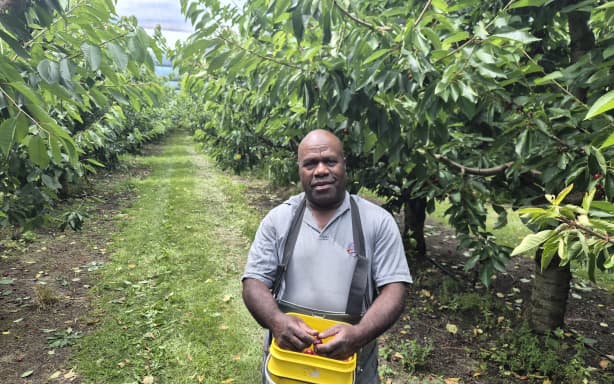
Mike, a ni-Van RSE worker, has been coming to Clyde Orchards from Vanuatu for almost 20 years.
Gianina Schwanecke / Country Life
ACT: ACT supports the RSE scheme and secured a coalition commitment to increase its cap, which rose from 19,500 to 20,750 in 2024. We support more flexible arrangements, clearer deductions and safeguards against exploitation.
Green Party: The Green Party would not set RSE numbers in isolation from workers’ rights or the effects on Pacific communities.
Aotearoa cannot build a resilient economy on cheap labour and insecure employment.
Before any expansion, the scheme must be redesigned to prevent exploitation, provide safe accommodation and fair pay, allow workers to leave abusive employers, strengthen union voice and worker representation, and create pathways to residency.
These are decisions that must be made with Pacific governments, unions, workers and affected communities, including consideration of skills lost from island economies.
Labour: Labour is committed to working with Pacific countries to expand regional labour mobility, improve worker protections and training, and manage workforce pressures.
National: Did not respond to RNZ Pacific.
However, Immigration Minister Erica Stanford announced a swathe of technical changes to the RSE scheme, in July, such as allowing workers to apply for migrant exploitation protection visas, and extending how long an employer could stay in the scheme if they treated their staff properly.
Stanford wanted to scrap annual limits on Pacific migrant RSE workers, but reportedly could not get the sign-off from Cabinet. She had proposed it would reduce administration costs for RSE employers, while increasing remittances sent back to the Pacific.
New Zealand First: Did not respond to RNZ Pacific.
However, the party’s immigration policy includes making all visa holders ineligible from claiming jobseeker, accommodation supplement, or any other benefits during their first 10 years; and Student Visa holders would not have automatic work rights after completion of their studies, and would be required to leave the country before being able to apply for another visa.
Opportunity: Opportunity supports Pacific labour mobility as part of Aotearoa New Zealand’s commitment to helping Pacific nations build economic resilience and prosperity.
The Recognised Seasonal Employer (RSE) scheme also provides essential seasonal workers for our horticulture and viticulture industries.
Rather than committing to a fixed increase or reduction, we would assess labour demand alongside the priorities of Pacific governments to ensure an appropriate balance.
Our approach would aim to deliver mutual benefits for New Zealand industries and Pacific communities, while supporting sustainable economic opportunities across the region.
Te Pāti Māori: Te Pāti Māori will ensure that there continues to be opportunities for RSE workers coming from the Pacific, but we need to make changes to visa conditions to protect our seasonal workers.
Every person who lives and works in Aotearoa deserves the freedom to be treated with dignity, to be free from exploitation, and to build a better life for themselves and their whānau. Visas that tie people to a single employer undermine these freedoms and create conditions that can lead to exploitation.
Under the Recognised Seasonal Employer Limited Visa, and the Accredited Employer Work Visa, a worker is unable [cut off due to 100-word limit].
If you could tell Pasifika voters one thing, what would it be?

Tofiga Maletino performing a Samoan dance group from Alfriston College.
Nick Monro / RNZ
ACT: Your hard work should mean a better future for your family.
ACT stands for lower living costs, more choice in your children’s education, safer communities and the freedom to get ahead through work and business.
We want a government that respects your contribution, treats everyone equally and delivers results for your family. We want to invigorate New Zealand with the aspiration and ambition the country was once known and world famous for.
Green Party: Aotearoa would not be the country it is without the generations of care, work, culture and leadership Pacific communities have contributed.
We want an economy that works for all of us – where everyone can access the essentials of a good life, young people can put down roots, and aspirations dreamt up in South Auckland garages have the support to become reality.
Our record – from restoring citizenship rights for Sāmoan elders to campaigning for a Pacific visa waiver – shows what community organising and political courage can achieve together.
Labour: This election is about the cost of living.
Only Labour has a plan to make everyday life more affordable and only a vote for Labour will ensure a change of government. Make sure your voice is heard by getting enrolled to vote before 25 October.
National: Did not respond to RNZ Pacific.
New Zealand First:: Did not respond to RNZ Pacific.
Opportunity: Everything about Opportunity’s approach from politics to the economy will be familiar to Pasifika peoples such as decision-making that is grounded on consensus building with an economic view that values intergenerational thinking and collective prosperity.
Māori and Pasifika communities have always known how to build unity, enduring community survival and valuing conservation of natural resources.
These have now become recognised as our way forward as Aotearoa New Zealand and Opportunity Party will be guided and led by these values to build a sustainable and inclusive future for all peoples to thrive together.
Te Pāti Māori: The future of an Aotearoa we can all share in must be grounded in our shared-kinship and collective obligations to one another. While Te Pāti Māori acknowledges the cultural diversity of the Pacific family, we believe that our collective future across this great ocean lays in whakapapa inherited from our ancestors.
Whakapapa must be the foundation for the collective overcoming of the challenges of the 21st century, such climate change, military escalation and social cohesion.
We owe this responsibility of belonging to future generations as their birthright inheritance.
For more information on what each party has promised, read RNZ’s policy guide here. This will be continually updated until election day.
