


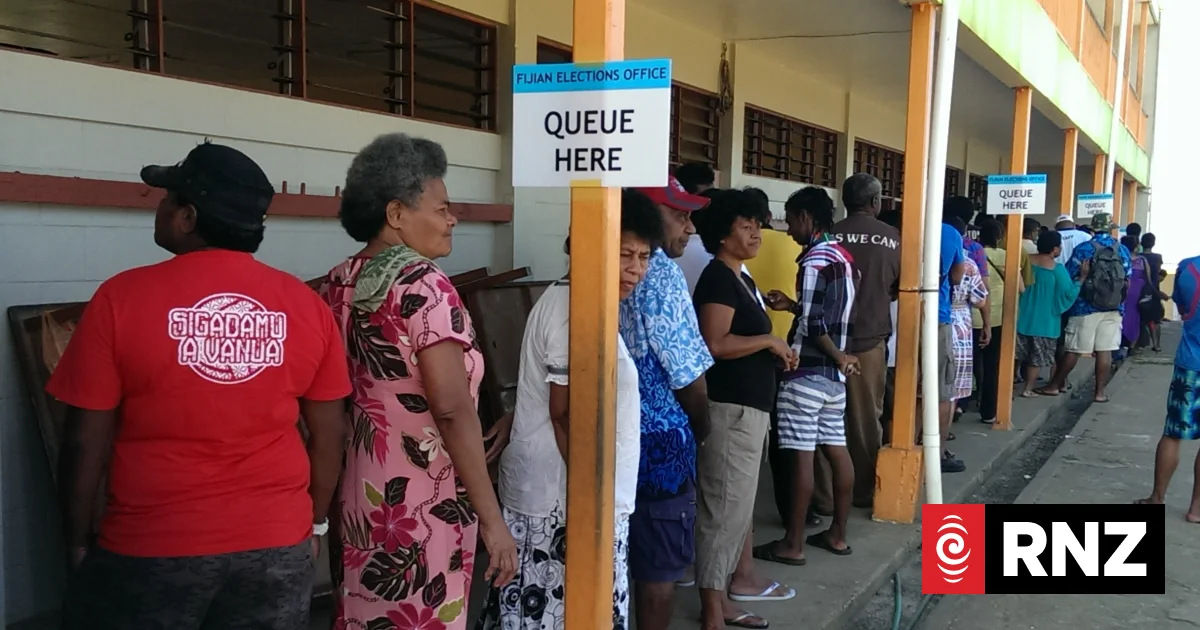
Political parties, candidates and Members of Parliament (MPs) gearing up towards Fiji’s upcoming general elections have been encouraged to adhere to strict campaign rules to avoid getting into trouble.
Eleven political parties are now confirmed to contest the election so far – the highest number of parties since Fiji’s return to democratic rule in 2014.
The country’s Electoral Commission adopted the Campaign Limitation Rules 2026 late last month to provide clear guidance on campaign activity by political parties and candidates.
The rules include a complete ban on using taxpayer-funded and state resources to advance political campaigns and limitations on where campaign materials can be used.
The Commission said the new rules, which aim to “level the playing field”, will come into effect on 20 October.
“One key area covered by the Rules is the prohibition of State or Government resources for campaigning. Government resources must not be used to support election campaigns,” the Electoral Commission said.
“This means state-funded equipment, communication networks, transport or shipping services, and Government premises cannot be used for campaign activities, unless allowed under the Electoral Act or the Rules.”
It said the rules make a clear distinction between official duties and campaigning.
“The Rules address the use of incumbency advantages during the campaign period, where it is prohibited for any Member of Parliament, political party or candidate or anyone acting on their behalf, to use any State resources in any activity that is connected to any campaign.”
The rules also identify places and situations where campaigning or the placement of campaign materials is prohibited.
“This includes while public servants or MPs are performing their official duties, as well as at public libraries, childcare and early childhood facilities, hospitals, aged care facilities, prisons and detention facilities, and public offices.”
According to Fiji’s Electoral Act, any person who violates campaign rules commits an offence and can face up to a FJ$10,000 fine or up to five years behind bars, or both.
