


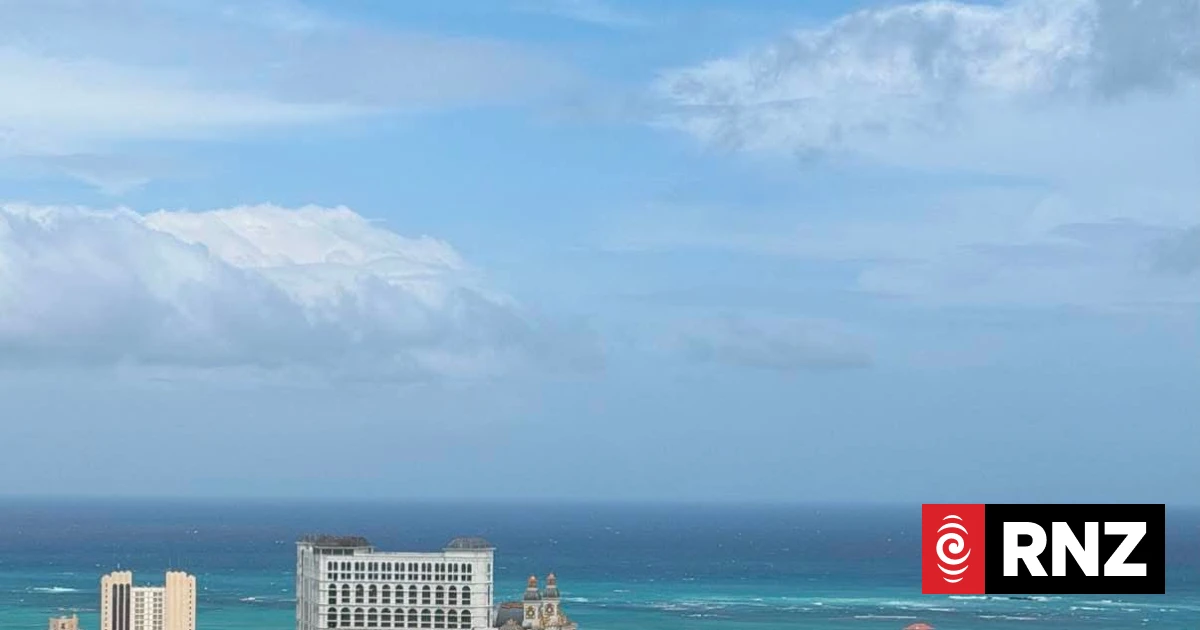
The Northern Mariana Islands (CNMI) is losing about 1000 people a year because of a lack of economic opportunities, a senior Commonwealth official has told US federal officials.
BJ Nicholas, policy adviser for military affairs in the Office of the Governor, made the assessment during an Interagency Regional Convening in San Francisco this month.
“Right now, we’re averaging about 1000 people a year that we’re losing. And it’s all because we don’t have an opportunity,” Nicholas said.
The CNMI, a self-governing US territory, has a population of less than 45,000 people.
Nicholas warned that continued population loss was compounding the Commonwealth’s economic problems by further shrinking its private sector and tax base.
“With our diminishing private sector, we don’t have a tax base. Without a tax base, how are we going to continue to maintain a government? Financial insolvency at one point was a discussion. Now it’s a potential reality,” Nicholas said.
Matthew Deleon Guerrero, senior policy adviser to Northern Marianas Delegate Kimberlyn King-Hinds, also painted a bleak picture of the islands’ economy.
“There is no economy in the CNMI,” he said, describing “rapid out-migration” and “incredible rates of people leaving.”
Deleon Guerrero said tourism, historically the CNMI’s main economic driver, needed about 500,000 visitors to be viable, compared with about 100,000 this year.
“Next year, it’ll be less. So the trajectory is going farther and farther away from viability,” he said.
Disadvantaged
The CNMI delegation used the San Francisco gathering to raise wider concerns over infrastructure, utilities, healthcare, disaster resilience, federal grant access, and the Commonwealth’s role in US security strategy in the Indo-Pacific.
Nicholas said the CNMI is also disadvantaged when competing against much larger US jurisdictions for federal funding, citing the Port of Saipan potentially competing with ports in Oakland and Los Angeles.
He asked federal agencies to review the laws governing their grant programmes to determine whether the Commonwealth is eligible for assistance, saying officials had previously found programmes in which the CNMI had not been included.
CNMI Governor David Apatang, who did not attend the gathering because of ongoing work on the Commonwealth’s fiscal year 2027 budget, said the CNMI was seeking a stronger federal partnership that recognised its remote location, limited infrastructure, and vulnerability to natural disasters.
“Our objective is a federal partnership that is stronger and more responsive to realities of our remote location, limited infrastructure, exposure to natural disasters, and responsibilities as a US territory,” Apatang said.
