


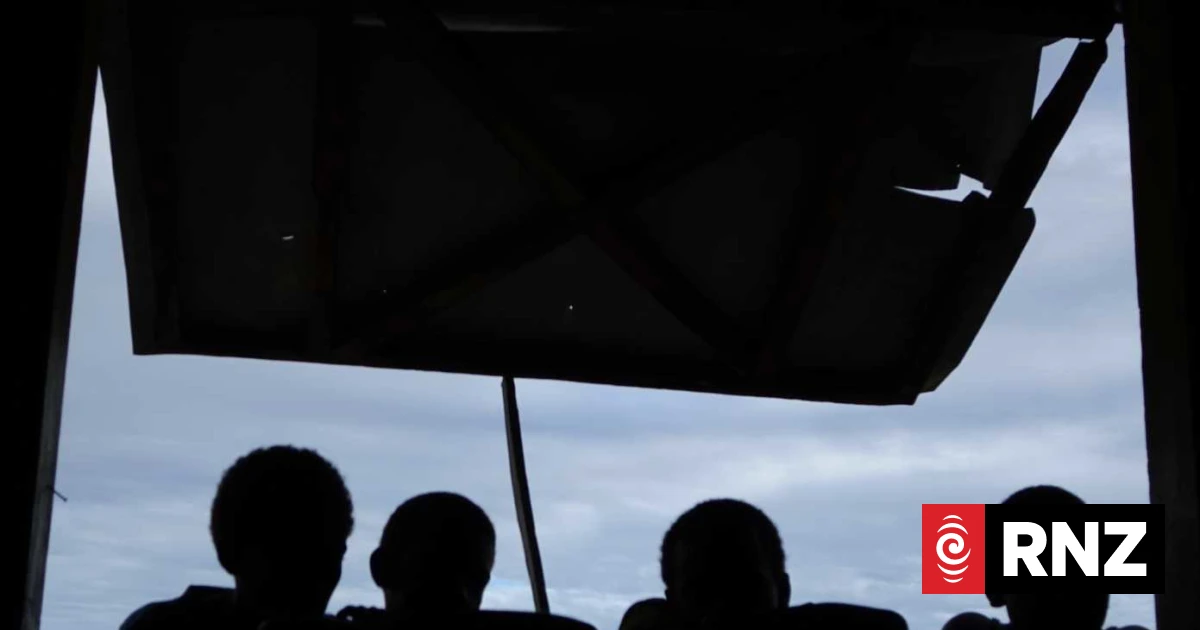
Vanuatu joins push to protect children from climate crisis
Vanuatu has signed an international declaration ensuring children and young people have a greater say in climate decision-making.
The Declaration on Children, Youth and Climate Action supports governments to better consider the rights, needs and voices of children and young people in climate policies.
Vanuatu is the fifth Pacific country to sign the declaration, which has been recognised by more than 75 countries and territories worldwide.
The signing took place during Vanuatu’s annual youth conference on 21 September, where young people presented a petition to the country’s Climate Minister Ralph Regenvanu.
Vanuatu is the fifth Pacific country to sign the declaration.
RNZ / Kim Baker Wilson
Almost half of Vanuatu’s population is under 18.
Speaking to Pacific Waves, UNICEF Pacific representative Hamish Young said there are seven commitments within the declaration that are all about empowering the role of children and young people in relation to climate change.
Young said UNICEF is looking to see if government policies, action plans, guidance and legislation put children’s best interests first from a climate perspective.
However, he said the declaration is not something the global agency can use to hold the Vanuatu government to account.
The impacts of climate change are already being felt by young people in the country, Young said. In an essay Young received from a young woman in Vanuatu, she wrote about experiencing water shortages as wells dried up, and food insecurity in her community as fish stocks declined.
Young also said that when twin cyclones Judy and Kevin struck Vanuatu in 2023, approximately 58,000 children were in need of humanitarian assistance.
The effects of climate disasters have also resulted in the displacement of thousands of children, according to UNICEF and between 2008 and 2020, around 5700 were displaced due to weather-related disasters.
Risks of human trafficking as a result of displacement
Young said climate-related displacements can also expose children to greater protection risks, including trafficking.
“Any form of displacement makes children more vulnerable to child protection threats. So yes, trafficking would be one of them.”
Young said there is currently no hard data on how widespread child trafficking is in Vanuatu.
Research published in 2023 examined the link between climate change, displacement, violence and exploitation in Vanuatu and Fiji.
The research argues that loss and damage from climate-related disasters extends beyond environmental destruction, it also increases children facing higher risks of violence and abuse.
Looking ahead, Young said the declaration provides an opportunity for children and young people in Vanuatu to have a more meaningful role in decisions about their future.
He said their participation needs to translate into real changes in government policy, rather than becoming a tokenistic gesture.
Young said UNICEF will continue to work with the Vanuatu goverment, but the responsibility of honouring the commitments within the declaration lies solely with the government and its young people.
