


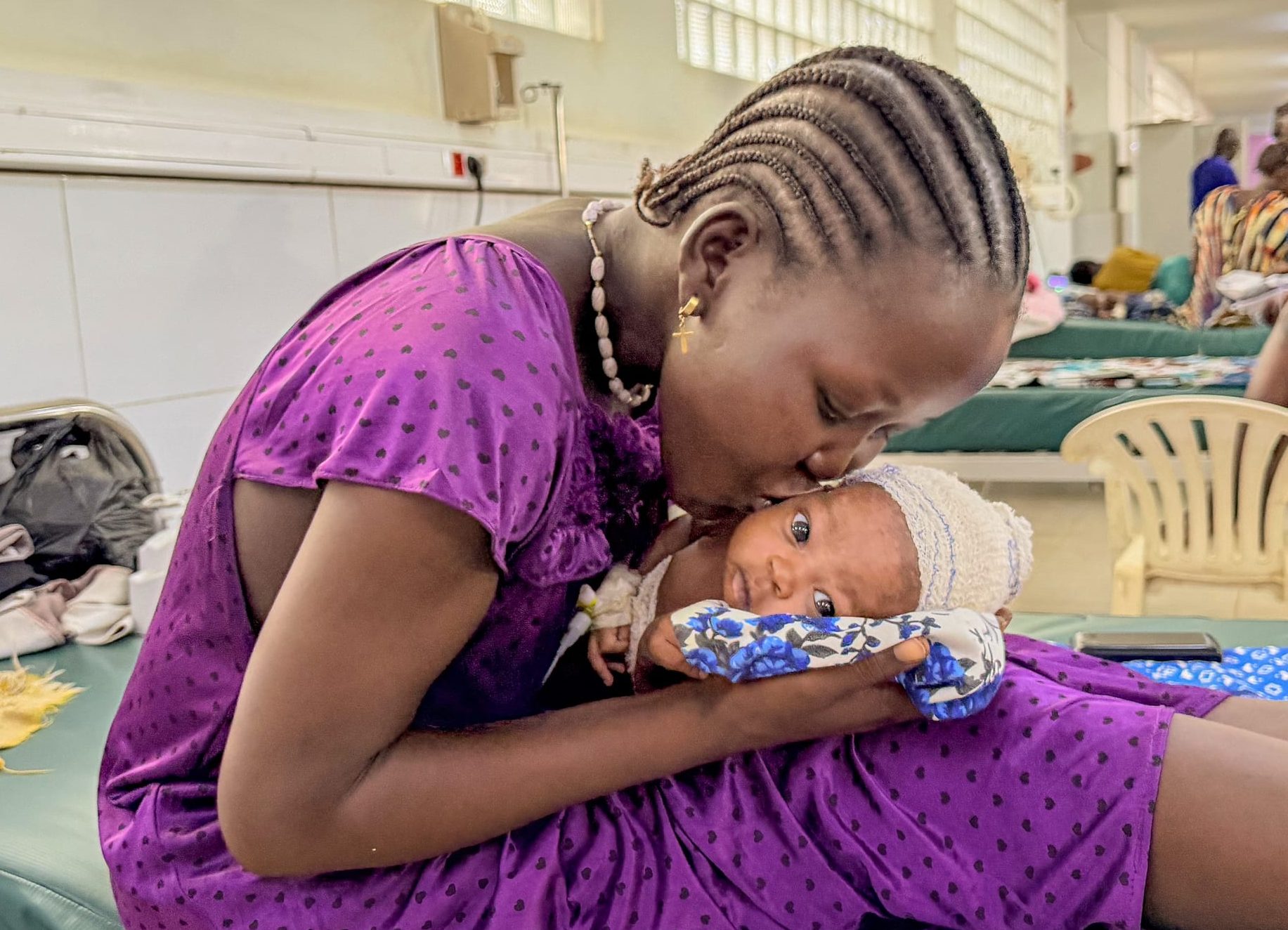
South Sudan has been devastated by a civil conflict that began in December 2013, about two years after independence in 2011. Poverty and hunger are widespread. International support is inadequate, and healthcare is stretched thin at best, or simply non-existent.
As part of my communications role with Médecins Sans Frontières/Doctors Without Borders (MSF) in South Sudan, I took photos to bear witness to the experiences of people living there. I work within the ethical photography guidelines developed by humanitarian organisations which are designed to protect patient dignity, ensure strict consent and respect the principle of “do no harm”.
My photos captured some of those who were able to reach secondary healthcare: smiling mothers in maternity or neonatal wards, children recovering in the inpatient therapeutic feeding centre, locally hired staff at work. Each one tells a story, but it is not the whole story.
The paediatric intensive care unit at Aweil State Hospital, Northern Bahr el Ghazal State, South Sudan (MSF)
Having now returned to Australia, I often wonder about the stories of those I didn’t photograph — does their absence from the record diminish others’ understanding of the full truth of the situation? These stories, while not visualised, are no less real. I feel just as much responsibility to witness them, honour them and share them with care.
I want to talk about some of those stories. One is of a man in his mid-20s in the surgical ward of an MSF-supported hospital. A few weeks earlier, he had been moving his extended family and their cattle, along with other families in their community, fleeing the threat of violence and starvation.
Along the way, the group arrived at a forest. They were ambushed by a hostile tribe hiding among the trees, who opened fire, shooting and killing 10 people and leaving six more to die from their injuries. The attackers kidnapped seven of this young man’s nieces and nephews and stole their cattle. Days later, the man’s relatives found him clinging to life amid the horrific scene. He is the only survivor of the tragedy.
The man in the bed next to him, in a full-leg cast, suffered gunshot wounds in a different attack in the neighbouring conflict-affected state. He is so traumatised he no longer speaks at all.
After recounting what happened to him, the first man doesn’t want to talk anymore, saying he has pain in the area around his heart. A surgeon was able to remove the bullets from his chest, legs and pelvis, but he has a long road ahead. “I can’t feel my legs, and I can’t move my toes,” he says. He doesn’t yet know that he is permanently paralysed.
The people of South Sudan are severely traumatised. Violence has escalated in recent years, together with widespread poverty, hunger, displacement and the effects of climate events.
Attacks on healthcare have also increased. Since the beginning of 2025, MSF has experienced 12 attacks on staff and facilities, including the bombing of two MSF-supported hospitals in Lankien and Old Fangak and the looting of facilities in Ulang, Pieri and Akobo.
Together, these bombings and lootings have cut off access to MSF-supported healthcare for an estimated 760,000 people, at a time when healthcare needs are rising.
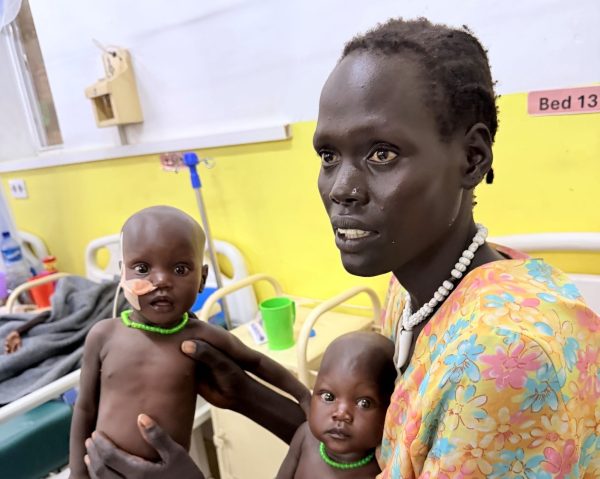
Akok walked six hours to hospital with her twin girls, after their untreated common illnesses escalated and they developed severe acute malnutrition. (MSF/Joanne Lillie)
At the same time, international humanitarian support is being withdrawn, resulting in the collapse of primary healthcare services. In one state, two-thirds of community health centres have closed, making it harder for people to access care in emergencies or to prevent minor conditions escalating into fatal complications. MSF teams in one secondary hospital have seen a 90% increase in new inpatient therapeutic feeding centre admissions, a 30% increase in neonatal admissions and a 30% increase in complicated deliveries in the first half of 2026, compared with the same period last year. The medical data is shocking, but it’s hard to grasp until you meet someone behind the numbers.
Another young woman of 16 sought care at a local primary health unit on the day she went into labour with her first baby, only to find it closed. After another day in labour, she and her mother travelled further from home to find another health centre. When they arrived, they were told the staff could not help her.
By the time she reached the MSF-supported hospital, she had been fully dilated for five hours. She had an emergency caesarean-section and the baby was immediately resuscitated in the neonatal unit, but sadly passed away the next day.
The obstetrician told me that if she had been able to reach skilled care earlier, the outcome would likely have been very different.
When I expressed my sorrow for their loss, the woman’s mother told me she was okay, because she had thought her daughter was going to die too. I had been there after the baby passed, and again later when the team determined she needed further surgery to clear fluid in her abdomen.
When the mother saw me on the day of the procedure, her face lit up and she held out both her hands. By association, because I was in the white MSF vest and had brought her to her daughter’s side, in her mind I was part of the team that saved her daughter’s life. She wanted to tell me how grateful she was and, although I don’t speak Dinka, I understood her perfectly.
At another hospital, there was a tiny girl who succumbed to severe acute malnutrition and its complications. Her little body just couldn’t go on. As she was zipped into a small white body bag, her stricken father waited to receive his child’s body for burial. He seemed resigned. It would not have been his first loss. Around 10% of all children in South Sudan die before reaching their fifth birthday, mainly from preventable and treatable illnesses.
These are a few of the people I did not photograph, because ethical storytelling sometimes means putting down the camera. They were traumatised, vulnerable, unable to provide informed consent, or living with circumstances that could have exposed them to stigma or harm.
But just because we can’t see their faces on screens or in print does not mean their stories shouldn’t be amplified and added to the institutional record of the cost of conflict and lack of humanitarian support in the country. We must not accept the unacceptable. We must not forget South Sudan.
