


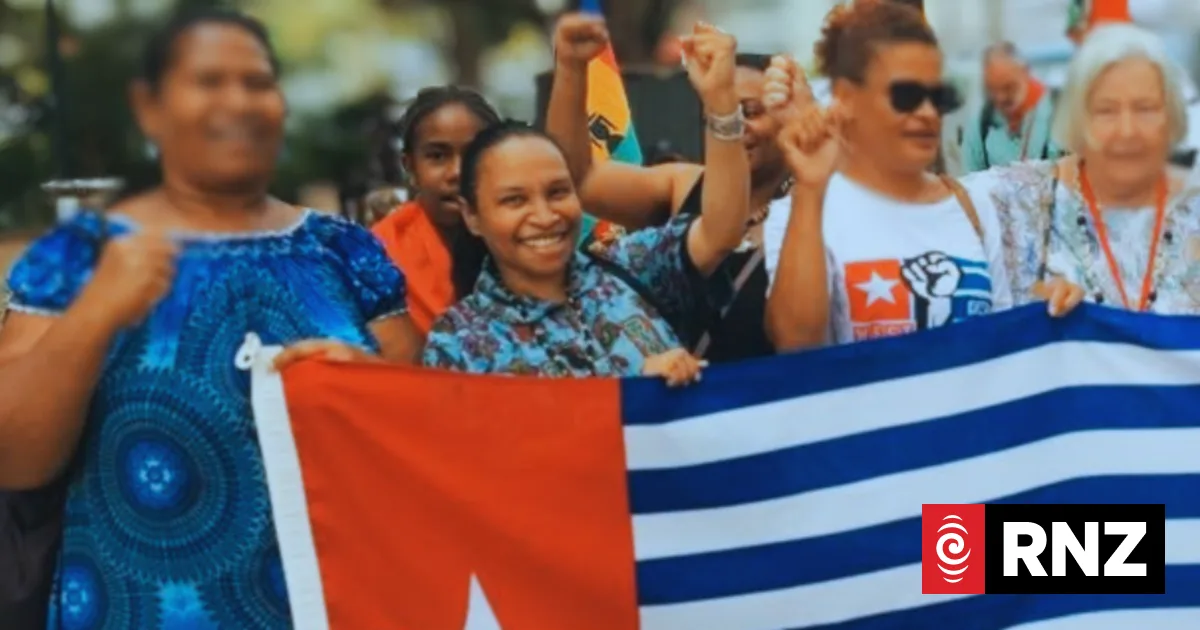
For 20 years, West Papuan activist Paula Makabory has not set foot in her ancestral homeland. Her family still lives in West Papua, but she has not seen them since she left in 2006.
Speaking to Pacific Waves from Melbourne, Makabory said she does not know what would happen if she attempted to return.
West Papua activist responds to Indonesia’s UN visit pledge
As Pacific leaders push Jakarta to allow a long-awaited United Nations human right commissioner visit to West Papua, Makabory, who is an executive member of the United Liberation Movement for West Papua (ULMWP), said the leaders needed to apply more pressure on Indonesia.
In 2019, Pacific leaders requested that Indonesia allow a team from the UN human rights office to visit West Papua to conduct an independent investigation into the alleged human rights abuses in the region.
Seven years later, the request for the visit has been unfruitful.
But this year during the Pacific Islands Forum leaders meeting in Palau, the Melanesian Spearhead Group (MSG) stated that if Indonesia does not allow the visit to happen, they would review its associate membership status in their 2027 summit.
AFP/Andrew Gal
In a statement sent to RNZ Pacific, a spokesperson for the Indonesian embassy in New Zealand said there had been no discussion of a review on its membership within the MSG. They also stated that the UN visit was on track.
Makabory said she would believe the visit was happening when Indonesia made good on its commitment.
“I think it’s going to be great news if it comes to action for real, because it has been a couple of years that Indonesia is still not talking or even inviting the United Nations human rights commissioner, or her office to visit West Papua to conduct an independent investigation,” she said.
Makabory said the prime ministers of Fiji and Papua New Guinea need to negotiate a firm timeline with Indonesia for the visit, otherwise Indonesia will “never open the door”.
Melanesians ‘need to stand up strong’
Makabory said the situation in West Papua is worsening, with humanitarian and environmental concerns at a crisis point.
According to Makabory, there are over 125,000 Indigenous Papuans who are internally displaced across multiple regencies, including Nduga, Intan Jaya, Puncak, Yahukimo, Pegunungan Bintang, Jayawijaya, Maybrat, Teluk Bintuni, Yapen Islands and Tambrauw. The displacements, she said, was the result of military operations, aerial bombings and armed conflicts.
There are over 80,000 Indonesian security forces operating in West Papua who Makabory alleges are responsible for extrajudicial executions, civilian shootings and disrupting peaceful protests.
Makabory also raised concerns about the expansion of the Merauke food estate and mining operations, saying they are destroying Indigenous land and contributing to deforestation and environmental damage.
In addition to the UN human rights office, Indonesia needs to allow other international groups, such as humanitarians and foreign journalists, to enter, Makabory said.
She added that this can only happen if the MSG uses its influence with Indonesia rather than signing deals.
“I think the MSG countries or leaders as guardians of our region, they need to stand up strong. They need to see that West Papua belongs to Melanesia, and they need to protect their own kind.”
A review of Indonesia’s associate membership in 2027 on the condition that no visit will happen isn’t strong enough, according to Makabory. She said the MSG should take it a step further and suspend Indonesia.
Despite being barred from returning to West Papua, Makabory told Pacific Waves it is her homeland and nothing compares to it. She said she believes that the spirit of the Melanesian brotherhood and Pacific islanders will lead to a path that will “save West Papua”.
