

Members of Wellington’s Papua New Guinea community say Tok Pisin is a versatile language that many people can use with relative ease.
Tok Pisin Wik is underway this week with a series of events around New Zealand celebrating Papua New Guinea’s national language and traditional cultures.
The Ministry of Pacific Peoples has provided some useful resources for the week – Tenkyu tru!
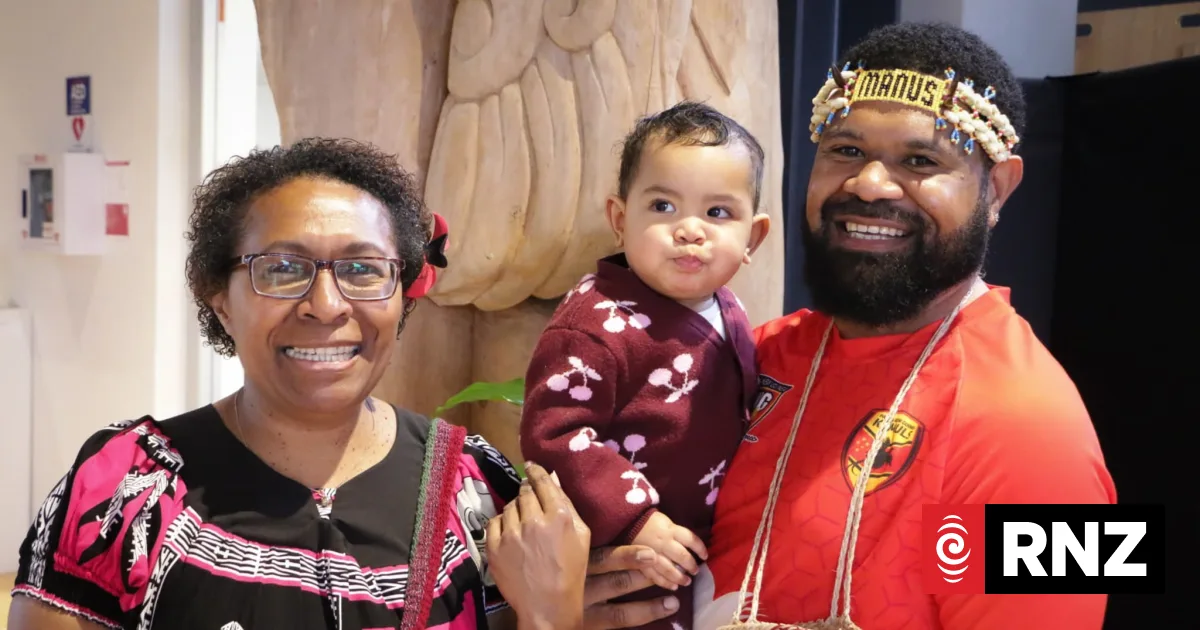
Ancey Wamiri, a school teacher, told RNZ Pacific she uses Tok Pisin every day with family and friends, also teaches it during Tok Pisin Wik sessions.
Describing Tok Pisin as being in her blood and bones, Wamiri explained that the language has been been an “essential unifying factor” for people in a country of many diverse cultures.
“The wonderful thing about Tok Pisin is it has united us as a country, to be able to connect amongst ourselves as a nation.
“If we didn’t have Tok Pisin then we’d be a completely divided people. So it was essential to have Tok Pisin become a part of the unifying language for our people.
A traditional dance from Papua New Guinea’s islands region performed at a cultural festival in the capital Port Moresby.
RNZ / Johnny Blades
Wamiri said Tok Pisin is very much a living language that is never stagnant.
“It’s ever developing and ever evolving and changing,” she explained.
“The great thing is it is a recognised language and not just a creole or a slight version of the English language – because it does have quite a bit of English in it – but somehow along the way it’s gone into waves, dips and highs to be a language that we can speak.”
Living language
If you’re nervous about giving it a go, don’t be. As the Wellington community say, it’s versatile, and there’s often no one right way to say something.
A common exchange may go: “Yu olrait? (How are you?)” responded to with “Mi olrait, tenkyu (I am good, thank you)”
Tommy Poliap Posangat told RNZ Pacific that from its origin, Tok Pisin was created as a way to bridge diversity.
“I believe Tok Pisin was created during he plantation period, when they brought all the islanders, Melanesians, together to work the plantations,” Posangat said.
“And because PNG’s got a variation of languages, over 800 languages, they’ve had to come up with a language that they can all speak and understand each other – not just the Papua New Guineans but you have the Solomon Islanders, Fijians and the Vanuatuans coming together, so that’s how Tok Pisin was formed backed then, and it’s just been evolving ever since.”
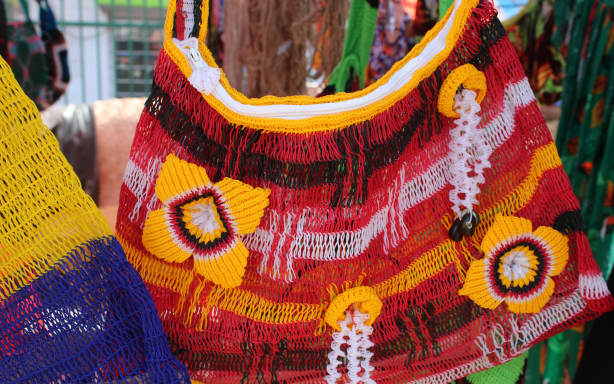
Synthetic wool and plastic have replaced plant fibre material in many Papua New Guinea cultures but the art of bilum making remains as vibrant as ever.
RNZ Pacific/Scott Waide
Every day use
College student Naimah Leahy said the majority of her wider family still lives in PNG, so she makes an effort to stay in touch, which in turn helps keep her use of Tok Pisin alive.
“Apart from the time difference (two hours), I almost call them every day, message every day, make sure that I still am connected to those who are in Papua New Guinea because that’s like my home,” Leahy said.
Another college student from Wellington who is Papua New Guinean is Dziewanna Wamiri-Cokataki who said Tok Pisin is a beautiful language.
“It’s like a wave, it’s very up and down. You talk with a lot of emotion,” she said, adding that using it with friends was a good way to keep growing the language.
“It’s very cool to try and converse and learn, so that’s what we try and do.”
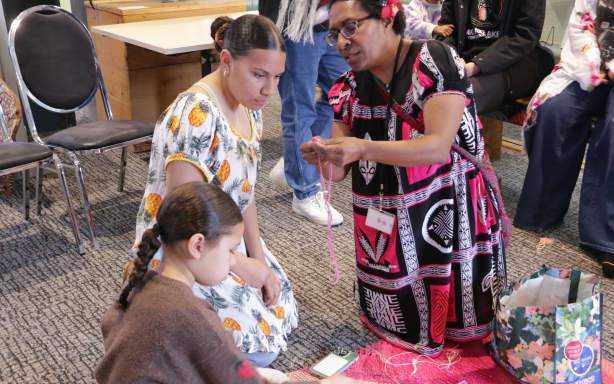
Bilum weaving workshop at Pataka, one of a series of events in Tok Pisin Wik, marking PNG’s language and cultures.
RNZ Pacific / Johnny Blades
