

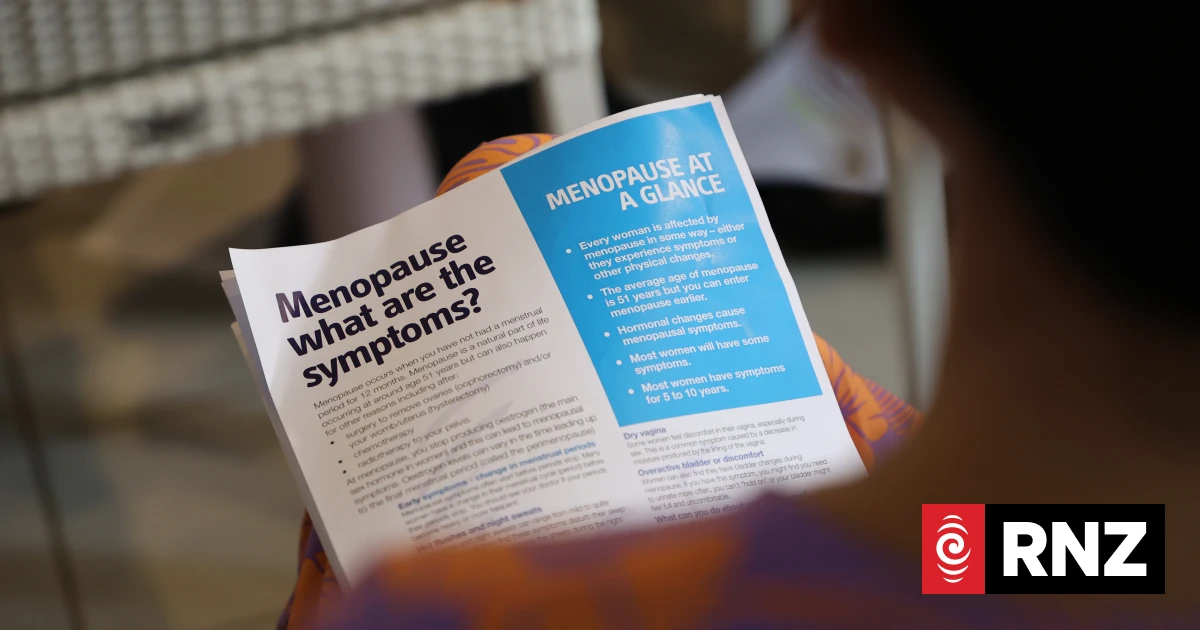
A group of Cook Islands women are pushing to break the silence around menopause, saying a lack of conversation is leaving women to navigate this phase of life alone.
Menopause is when a person has gone 12 consecutive months without a menstrual period, marking the end of their reproductive years. It usually occurs between the ages of 45 and 55.
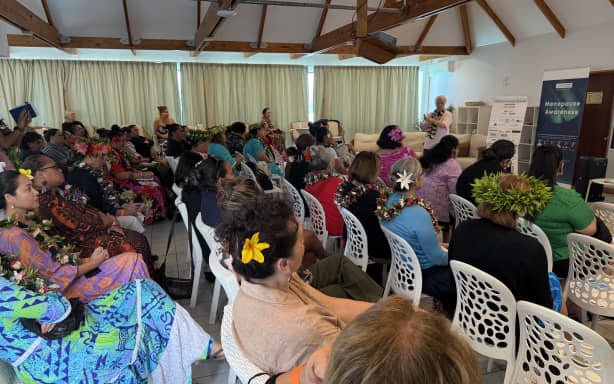
The first menopause awareness event held in Rarotonga on 14 August, brought together local and international health experts to discuss what really happens during menopause and what support is available locally.
The event was held under the banner of Te Marū o te Vaine – a group of Cook Islands women who say menopause needs to be talked about more.
Pacific Society for Reproductive Health secretariat head Dr Amanda Noovao-Hill said while menopause was a normal biological phase of life, it is a culturally sensitive topic.
“Nobody talked about it. On the one hand, it was a taboo topic, but on the other hand, people didn’t believe it existed … But in fact, it is something that affects every single woman on the planet,” Dr Noovao-Hill, who is Cook Islands-Fijian, said.
“We will all go through menopause when we get to a certain age. So it’s a biological thing. But culturally, we are almost not encouraged to share it or to talk about it.”
Dr. Amanda Noovao-Hill.
RNZ Pacific / Tiana Haxton
The former obstetrician and gynaecologist shared there is also limited access to local health services to support women through menopause. HRT – Hormone Replacement Therapy has only recently become available by prescription in Rarotonga.
Dr Noovao-Hill said the menopause awareness event was an opportunity to hear from Cook Islands women themselves about what they know about menopause, and what they want to know more of.
In the absence of any significant regional research about how women experience menopause, the organisers surveyed women attending in person, and those joining online from the Pa Enua (outer islands).
Dr Noovao-Hill explained that understanding the experience of Pacific women was important because information collected overseas may not always translate directly to Pacific communities.
“We’ve also got to be really aware that what might work for a group in say, Australia, New Zealand, the [United] States, isn’t the same for the Pacific.
“We go through things differently, and we also don’t have any data or any information about how women do experience menopause as a Cook Islands woman.”
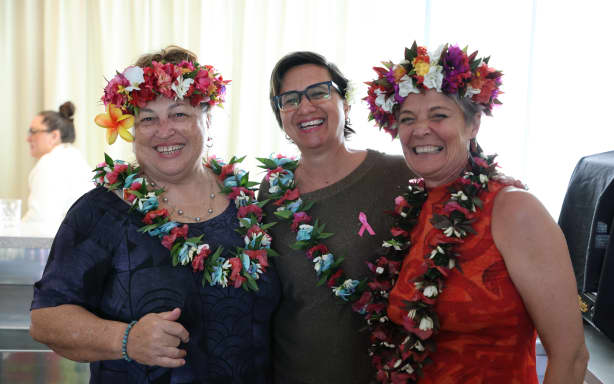
Te Marū o te Vaine is a group of Cook Islands women who say menopause needs to be talked about more.
RNZ Pacific / Tiana Haxton
She believes opening up the conversation can help women recognize that the physical and emotional changes they are experiencing are part of a normal biological transition.
Sleep disruptions, mood changes, hot flushes, fatigue and loss of confidence can all affect women during menopause, but Dr Noovao-Hill said these symptoms were often misunderstood.
The misunderstanding itself can create a range of social problems for those living with menopause
One audience member shared that a health professional made her believe her symptoms were a mental health issue. Another said her husband was convinced menopause is a made-up condition.
“Some people have thought as they get older, they start to go a little bit mad. That’s not very nice because women do feel they do change… that can be perceived as very moody or bit depressed, or, you know, having some mental problems.”
“So if they don’t recognise that that’s actually part of the biology or the physiology of menopause, it becomes a much more difficult situation.”
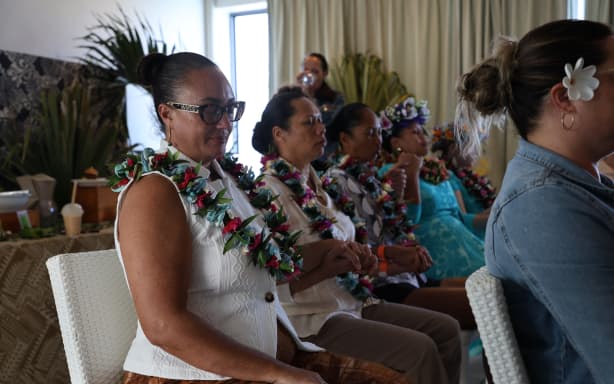
Attendees at the Te Marū o te Vaine menopause awareness event during a guided breathing exercise.
RNZ Pacific / Tiana Haxton
New Zealand women’s health and aging researcher Dr Wendy Sweet said menopause should not be viewed as the end of a womans reproductive years, but as a transition into another stage of life.
Her PhD research involved interviewing women aged between 50 and 60 across Aotearoa about exercise and healthy ageing.
She discovered many women were joining vigourous exercise programs and diets to avoid health problems they had seen their own mothers experience.
“When I asked why, every single one of them said, ‘because I don’t want to age like my mother.”
But despite reporting symptoms including hot flushes, poor sleep, fatigue and weight gain, Dr Sweet said none of the women identified menopause as a possible cause.
She said it highlighted the need for more conversations on menopause – and how to approach women’s health during mid-life, to avoid long-term health conditions later.
“My particular focus for, particularly for New Zealand and Pacifica women, is on cardiovascular health. It’s still the number one health problem for women as they come through menopause and into post-menopause. So, we’ve got to use the menopause transition and perimenopause transition, as this window of opportunity for helping cardiovascular health.”
In her presentation and panel discussion, Dr Sweet shared that nutrition and exercise can help women as they approach their menopause years.
“Menopause is the bookend to puberty. And if women can understand that they need to be healthier as they come into their post-menopause years, its going to impact not only their family, but certainly themselves and society as a whole.”
Dr Wendy Sweet (PhD) shared that nutrition and exercise can help women as they approach their menopause years.
RNZ Pacific / Tiana Haxton
For the organisers, the aim is to make menopause something women can talk about openly, and something their families and workplaces understand.
Dr Noovao-Hill said women should not feel they are alone or that menopause means they are losing their value.
“There is no woman that isn’t going to go through this, and it’s okay to start sharing our experiences. It’s really special and really important that women understand you’re not alone in this, it isn’t about losing youth, it’s actually just a phase.”
Sweet said those conversations should begin well before women reach midlife.
She pointed out that families need to understand what women may be experiencing and how they can support them, while their workplaces also need to recognize the impact menopause can have on women’s daily lives.
“Women are so influential in the family, in society… it’s really important for the family to be understanding what it is they’re going through. And that there’s a reason for how they’re feeling, and also get support from the family. And it’s the same with workplaces.”
She believes menopause should not be viewed negatively, but as an opportunity for women, families and communities to come together and better understand health and ageing.
For Te Marū o te Vaine, this first event is intended not as a one-off, but the beginning of a series of conversations – breaking the taboo on menopause in the Cook Islands, and the wider Pacific region.
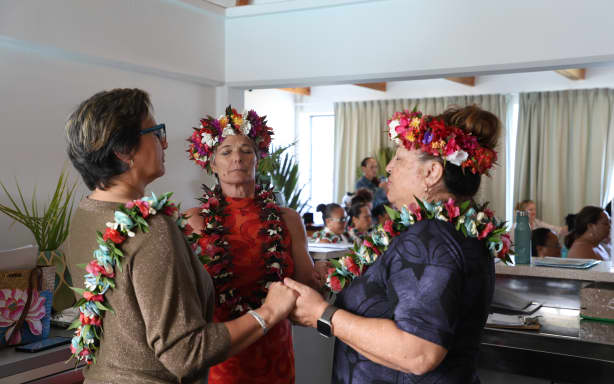
Te Marū o te Vaine is a group of Cook Islands women who say menopause needs to be talked about more.
RNZ Pacific / Tiana Haxton
