


Pacific island leaders will tackle transnational drug crime as they meet in Palau from Monday for a summit where tensions between Taiwan and China risk overshadowing regional priorities like climate change.
Palau, this year’s host of the 18-member Pacific Islands Forum, is among three members holding diplomatic ties with Taiwan and not China, a large creditor to many island states.
China, Taiwan and the US are among the aid partners invited to the forum, although not the leaders’ meeting. Beijing has protested Taiwan’s invitation.
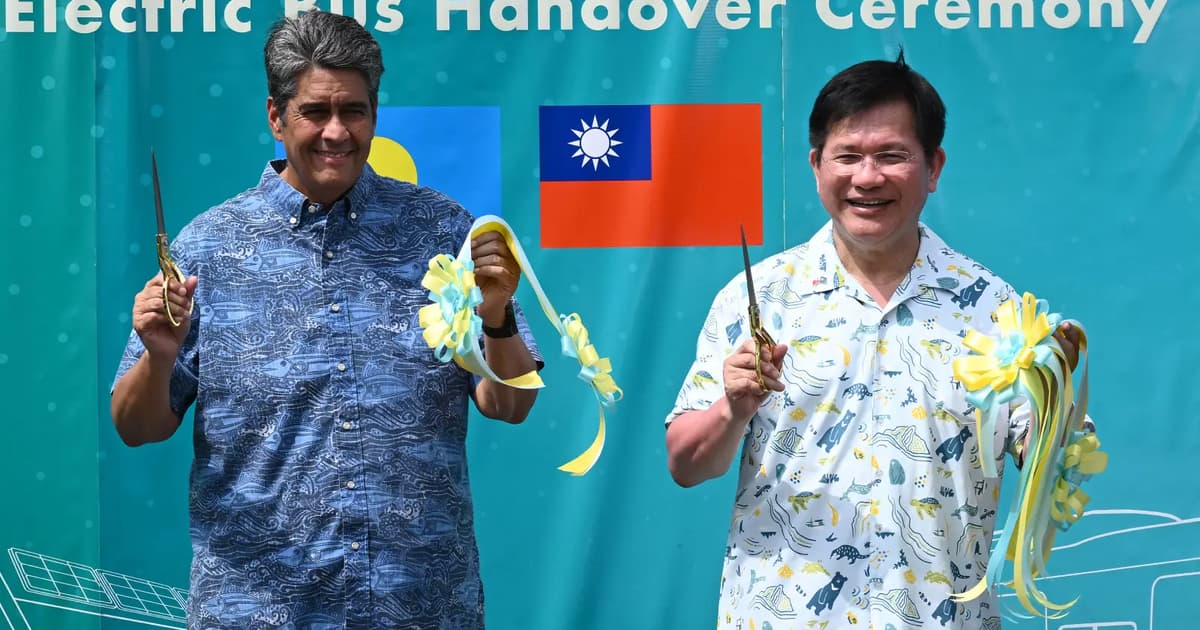
On Sunday, Taiwan’s foreign minister Lin Chia-lung cut the ribbon with Palau President Surangel Whipps at a ceremony handing over a fleet of electric buses donated by Taipei.
China retaliated against Lin’s arrival in Palau by declaring the tourism-dependent island an “unsafe” place for travellers, Whipps later told reporters.
Chinese tourists are the largest group of visitors to Palau, data shows.
The US Embassy issued a statement accusing China of attempting to “weaponize tourism to coerce Palau”.
“The Pacific is our home, not a theatre for geopolitical competition,” Whipps said in an interview on Sunday.
Tensions between the Pacific’s partners should not detract from island priorities of action on renewable energy, drug crime, food security and climate change, which had real impact on lives, he urged.
Island populations are struggling with rising fuel and food costs caused by the Middle East war.
Transnational policing
Around 110 police drawn from various Pacific islands will provide security at the forum, the first large-scale demonstration of Pacific-wide cooperation on policing.
Australia, the biggest forum member and aid donor, has led efforts for the Pacific to provide its own security, arguing there is no need for China to have police in Kiribati and the Solomons.
Whipps said the Pacific leaders would seek to build on policing ties to tackle drug crime.
Fiji, a major transport hub for the Pacific, is experiencing the world’s fastest HIV outbreak, driven by what health authorities say is risky injecting of methamphetamine.
Police seizures of cocaine and methamphetamine in Fiji, the discovery of abandoned “narco subs” in the Solomon Islands and drug packages washing to shore in remote islands have reinforced fears of drug cartels forming a Pacific Ocean trafficking highway.
A regional maritime response to rising drug crime will be discussed by the leaders, with Australia and Fiji expected to be major contributors if it is approved, Australian officials told AFP.
Whipps gave the example of a Chinese drug gang that had operated in Palau before moving to Fiji.
“Clearly the same people are roaming around the whole Pacific and is evidence of why we need to collaborate and share information. They are destroying our youth and destabilising our nations,” he said.
Tensions over China
Australian National University Pacific expert Graeme Smith told AFP “climate change is at the top of the Pacific priority list, but the challenge of transnational crime is growing with the outbreak of HIV in Fiji”.
Fourteen island leaders are expected in Palau, after pro-Beijing Kiribati said its leader could not attend and the Solomon Islands prime minister Matthew Wale left unexpectedly on Sunday, returning home to deal with a political crisis — a no confidence motion lodged against his leadership.
Solomon Islands had been China’s closest partner in the Pacific until Wale was recently elected, vowing to review a secret security pact and repairing ties with the US and Australia.
US deputy secretary of state Christopher Landau and US Coast Guard Commandant Admiral Kevin Lunday will arrive in Palau on Monday to strengthen ties with Pacific countries before travelling to Solomon Islands and Kiribati.
The East-West Center’s Henry Puna, previously the forum’s secretary general, told AFP that climate change should be the most important issue for Pacific leaders.
But the impact of China’s ballistic missile test into the region last month was still being felt.
The forum has been unable to issue a joint statement of condemnation after Kiribati and Nauru held out and leaders will continue to discuss it in Palau, Whipps said.
