


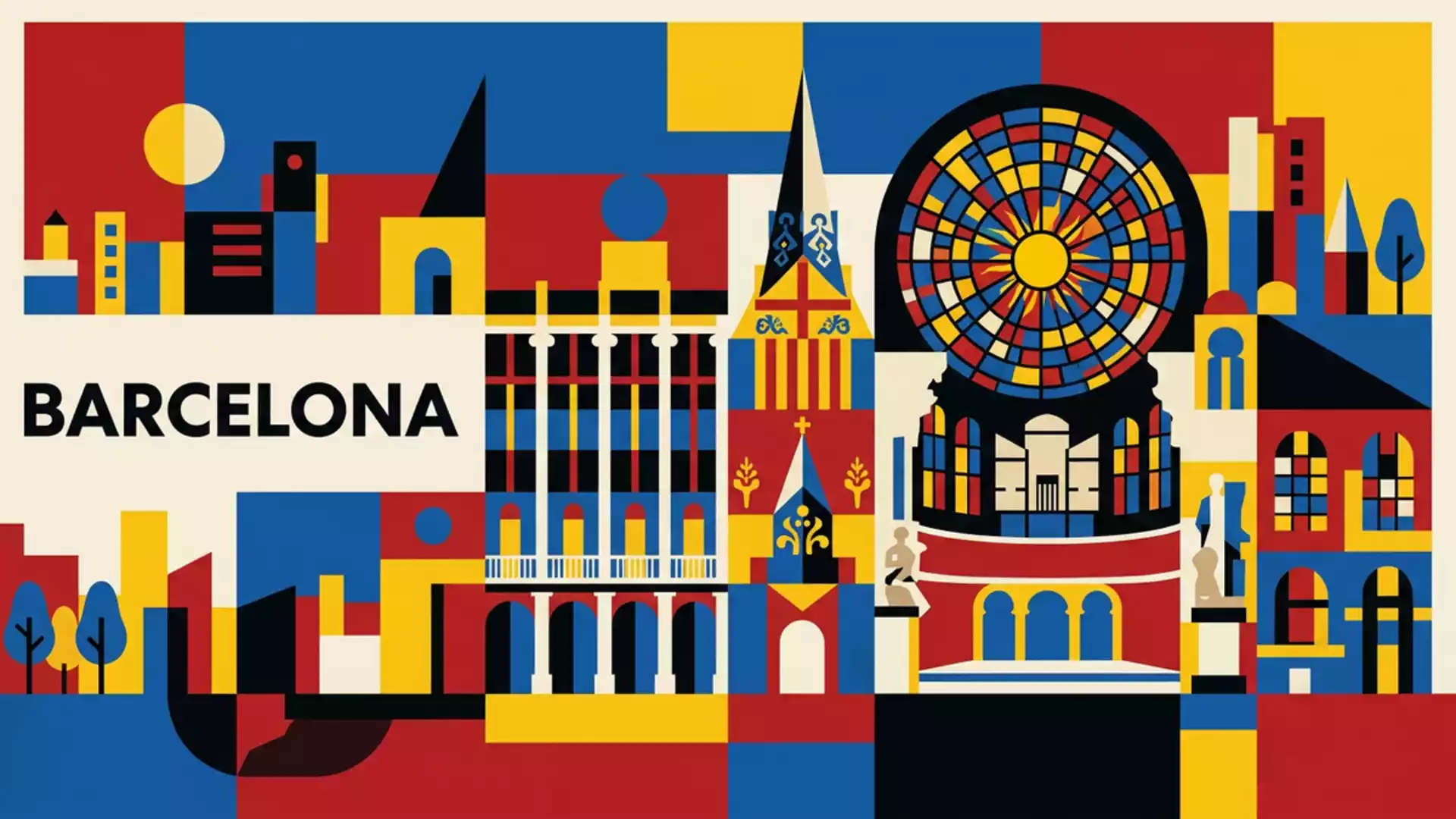
Palau de la Musica Catalana in Barcelona is a modernist concert hall of glass, mosaic and ironwork. Built between 1905 and 1908, it was designed by Lluís Domènech i Montaner for the Orfeó Català, and it entered UNESCO’s World Heritage List in 1997.World Heritage List in 1997Lluís Domènech i Montaner
A modernist hall of glass and iron
The building takes its character from a dense surface of colour and ornament. Brick, sculpture, stained glass and wrought iron appear together in a composition that belongs firmly to Catalan Modernism.Catalan Modernism
Its broad concert-hall interior is framed by elaborate surfaces rather than severe stone mass. That balance of light material and rich decoration is visible before any performance begins, and it gives the Palau de la Musica Catalana a distinct place in Barcelona’s built landscape.
Lluís Domènech i Montaner and 1908
Lluís Domènech i Montaner was one of the leading figures of Catalan Modernism, and the Palau de la Musica Catalana belongs among his best-known works. The hall was completed in 1908, placing it among the defining buildings of Barcelona’s early twentieth-century architecture.completed in 1908
The building was made for the Orfeó Català, the choral society associated with the hall’s name and identity. The relationship between music, civic culture and architecture is written into the fabric of the place, from the foyer to the concert space.
UNESCO recognition and civic memory
UNESCO listed the Palau de la Musica Catalana together with the Hospital de Sant Pau in 1997. In the listing, the building appears as part of the wider artistic legacy of Domènech i Montaner and Barcelona’s modernist quarter.UNESCO listed
That formal recognition sits well with the way the building presents itself on the street: ornate, urban and unmistakably public. Palau de la Musica Catalana combines concert-hall function with a surface language that draws on sculpture, mosaic, stained glass and ironwork.
Visiting Palau de la Musica Catalana: what travellers from Western Europe should know
- Palau de la Musica Catalana stands in central Barcelona, in the Sant Pere area. The nearest metro stop is Urquinaona, and local buses serve the surrounding streets.
- The building includes a concert hall and a richly decorated stair and foyer sequence. Several surfaces are close together, so the interior reads as a layered urban interior rather than a single room.
- The official language is Catalan and Spanish, and the currency is the euro.
- Entry requirements depend on your nationality; UK travellers can check the FCDO travel advice at gov.uk/foreign-travel-advice, Irish travellers the Department of Foreign Affairs at ireland.ie.
Searching for Palau de la Musica Catalana on social platforms
These links open searches for Palau de la Musica Catalana on each platform.
Frequently asked questions about Palau de la Musica Catalana
Where is Palau de la Musica Catalana?
It stands in Barcelona’s Sant Pere district, close to the old city grid. The hall sits among narrow streets rather than on a broad civic square.
What does a visit involve?
The building is a concert hall with a decorated interior, so the experience centres on space, ornament and performance. The stairways, foyer and hall form the main sequence.
What makes it distinctive?
Its combination of Modernista structure, sculpture, mosaic, glass and ironwork gives it a layered appearance. The 1908 building by Lluís Domènech i Montaner remains one of Barcelona’s key modernist interiors.
Disclaimer…
