


Misconceptions about the Recognised Seasonal Employer (RSE) scheme in New Zealand is one of the biggest challenges facing Fijian workers, the country’s diplomatic coordinator says.
Fiji’s RSE scheme country liaison officer Greg Traill told RNZ Pacific these false impressions lead to confusions about worker rights, health and wellbeing, as well as the duration of their short-term work contracts.
However, Traill, who was appointed to the position in December 2025, said despite the challenges, there have been positive feedback from both local employers and the workers themselves during his visits to sites throughout Aotearoa.
Traill said he has heard from around 460 RSE workers in New Zealand during his visitations over the past six months – and that number is expected to grow to about 1000 over summer.
“I must say I’m very happy with the way our RSE workers have conducted themselves in this scheme, in regards to work productivity and commitment to saving money for their families back home in Fiji,” he said.
He thanked the New Zealand employers who he said “are looking after our workers overall, which is a good thing to see”.
“I’m not saying there aren’t issues and some of the issues that I’ve experienced from my time visiting the workers is a lot of misconceptions about the RSE scheme from the Fijian diaspora and my job is to look after and advocate for the workers to ensure worker rights are well looked after.”
Traill is based in Auckland with the Fiji Trade Mission, which will convert into the new Fiji Counsul Office from October.
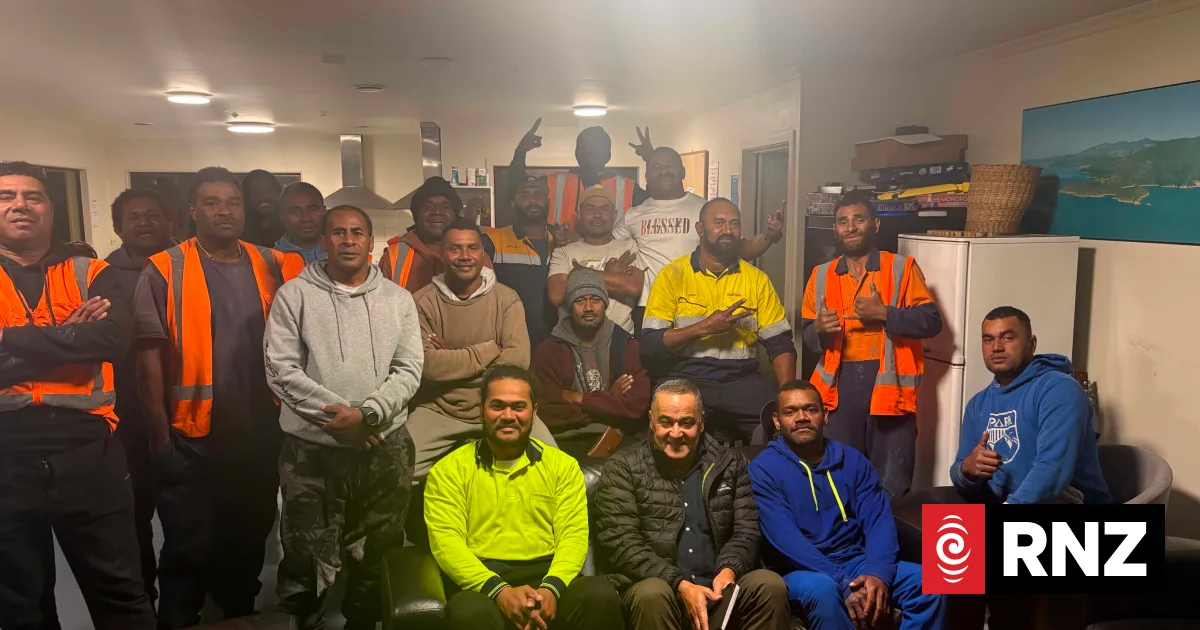
Fiji RSE country liaison officer Greg Traill, left, with employers and a Fijian RSE worker in Motueka during one of his visits.
Supplied
Work rights
He said health and wellbeing issues have been one of the areas that attracted a lot of queries from the Fijian workers, especially knowing their rights about working conditions, accommodation and working hours.
“Sometimes there’s questions about the pay and the working hours,” he said.
Traill said workers understanding that in New Zealand they are guaranteed a minimum of 30 hours weekly work was important for him to clarify every time the issue was raised.
“That is guaranteed perk hours, which is New Zealand labour law, especially for the RSE scheme.
“They are guaranteed 30 hours per week over the month of four weeks, which means they are guaranteed 120 hours paid, whether they work or not because it is seasonal work.”
Questions have also been raised about income tax returns, compared to those working under the Pacific Australia Labour Mobility (PALM) scheme.

Fiji RSE country liaison officer Greg Traill, middle, with Fijian RSE workers in Motueka during one of his visits.
Supplied
Traill said many workers believed they were entitled to tax returns.
“In the RSE scheme, our workers only pay a 10.5 percent rate, which is much lower than our ordinary New Zealanders, and they take much more money back home to Fiji, so they are not entitled to tax returns,” he said.
“That’s a recurring question that I encounter from all the groups that I visit.”
He said Fijian RSE workers have generally been good ambassadors for the country and their families, with dedication and commitment to their work, especially under the challenging winter weather conditions they are facing currently.
“I take my hat off to our Fijian workers in the regions from Northland down to Marlborough in the South Island, and up to Motuweka, who work tirelessly in the cold, especially in this New Zealand winter, which has been harsh this season,” he said.
“They have worked hard to save and send money back home to their families in Fiji and build a better life for themselves.”
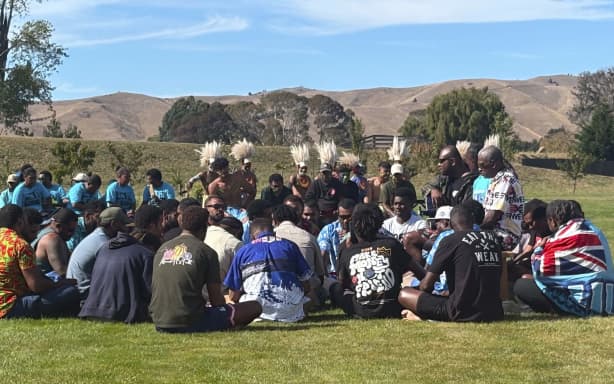
Fijian RSE workers in Blenheim performing at a Fiji community event.
Supplied
Support networks
However, there also some workers who tend to challenge the system and try to take the law into their own hands.
Traill said workers should use the support networks in place when they face challenges or are uncertain about issues.
“Within each RSE group of workers, there are team leaders and a pastoral care manager who look after the welfare of the workers,” he said.
“My advice is to seek advice early and do not let it fester. Contact me as your country liaison officer, as well as your team leader and pastoral care manager within the companies, so that we can attend to the issues that the workers are facing.”
He also expressed gratitude that workers are not absconding, as has been the base with some Fijian workers under the PALM scheme in Australia, adding that over the years there have been three or four cases of abscondment.
“We are very well behaved and stay within our conditions of a contract,” he added.
Traill said Fijians back in Fiji who plan to take up RSE work must bear in mind that it is seasonal work.
“It can vary from three months up to seven to nine months, compared to Australia, which is three to four years.
“So within those time series, you’re expected to save money as much as you can, work hard and make your families proud, and look after them while you’re here.”
Meanwhile, the New Zealand Horticulture Conference 2026 will be held in Wellington from 27 to 29 July.
The conference will discuss the RSE scheme, kicking off with the Pre-RSE Conference on 27 July, and includes discussions on ‘Safeguading RSE’ and ‘RSE in Practice: Wellbeing, Partnerships and the Future of the Scheme’ on 28 July.
Workers will also be part of the conference, presenting their voices in a 29 morning session on ‘Voices of the Scheme: Workers and Employers’.
