


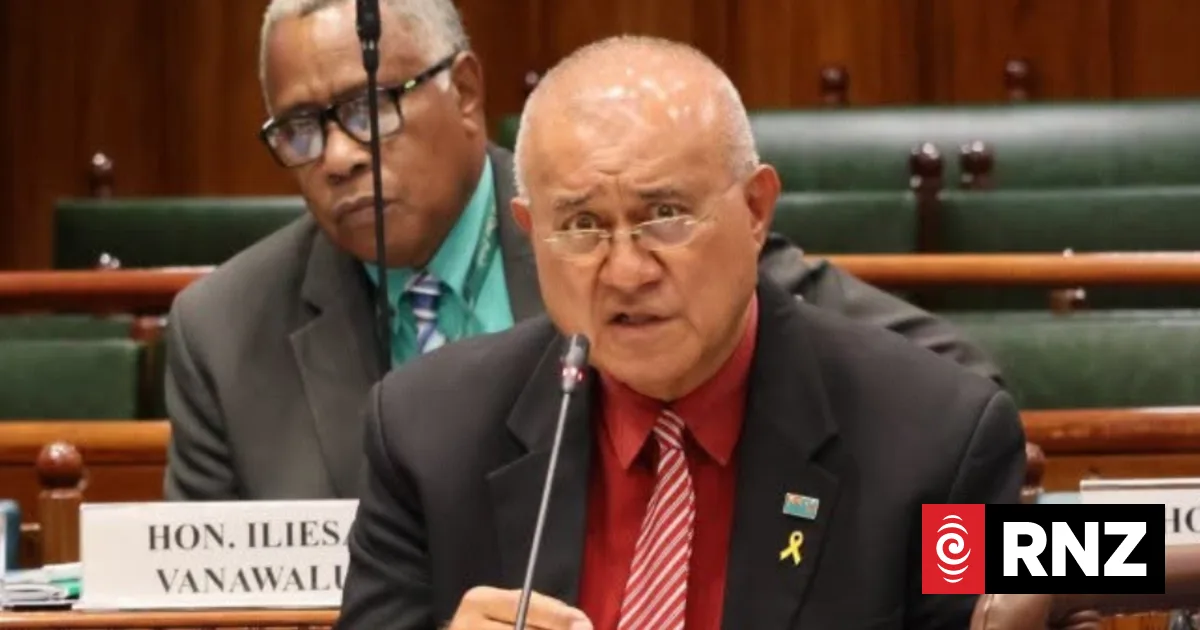
Fiji’s Police Minister Ioane Naivalurua walked back his assertion in parliament last week that more than NZ$3billion (FJ$4 billion) worth of illicit drugs reached the nation’s shores in the past three years.
“[The drugs] were circulated within local communities by external and internal actors, with over 2400 drug-related cases recorded last year alone,” Naivalurua said during a Budget debate last Tuesday.
“Few issues concern our people more today than the growing threat of illicit drugs and transnational organised crime. Drugs destroy lives, destabilise families, undermine communities and threaten the security of our nation,” he told parliament.
“The government continues to make the fight against illicit drugs and organised crime one of its highest priorities,” he said.
Fiji’s police minister says the government has made the fight against illicit drugs and organised crime one of its highest priorities.
Supplied/ Fiji Police
The Fijian government had allocated FJ$1.6m in the budget to strengthen Fiji’s counter narcotics capability.
“This investment will support the continued establishment of the Counter Narcotics Bureau, the recruitment of specialised personnel and the development of the Counter Narcotics Bill, needed to provide the bureau with a strong legal foundation,” Naivalurua said.
“This is a direct investment in enforcement, prevention and the security of our people.”
However, the police minister told RNZ Pacific that his 14 July statement was “misleading”, and clarified his parliamentary statement.
“The statement that the FJ$4 billion worth of drugs was in circulation in Fiji is misleading, as it was intercepted by police and law enforcement partners, local, regional and international. The harm it would have caused if law enforcement had not acted, would have been far more devastating, ” Naivalurua said in a written response to our questions.
“The seizures over the years in white and green drugs are reflective of collaborative efforts which are consistently being reviewed and strengthened through various security arrangements, such as the recent formalisation of the Vuvale treaty,” he added.
The treaty signed earlier this month commits Australia and Fiji to work together in tackling regional challenges, including climate change, transnational organised crime and illicit drug networks.
It was signed alongside the Ocean of Peace Alliance, or Veitacini Treaty, a military alliance that has a mutual defence clause.
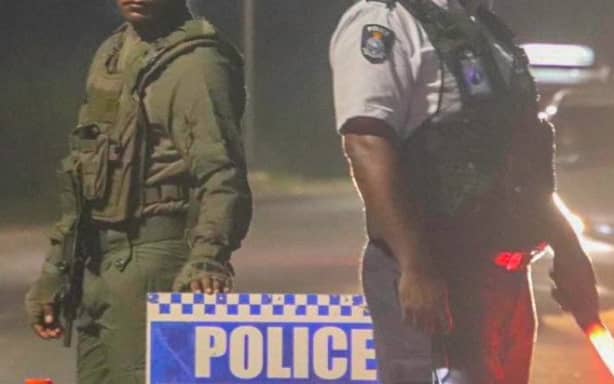
Naivalarua told RNZ Pacific that transnational crimes were global and required a global response.
Facebook / Fiji Police Force
Prime Minister Sitiveni Rabuka’s coalition government is treating the escalating drug crisis as a top national security priority, warning previously the issue threatens the indigenous way of life.
Intravenous drug use, particularly through highly dangerous practices like needle sharing, is also the main driver behind Fiji’s rapid rise in HIV infections.
Health Minister Atonio Lalabalavu said the government had been proactive about trying to get the HIV crisis under control, unlike the previous administration under Frank Bainimarama.
A Fijian high chief Ratu Tevita Mara, who is co-deputy chair of the Great Council of Chiefs (GCC), warned the coalition government last month that time was nearly up for it to deal with the country’s drug crisis.
“The window to act on Fiji’s drug crisis is closing,” the former military general said, in yet another salvo fired at the government, as the general election nears.
Ratu Tevita, the son of Fiji’s first prime minister and president Ratu Sir Kamisese Mara, said Fiji could be breeding a new generation of drug dealers and it was time the National Security Council acted urgently.
He is the traditional head of the Lau Province, and made the comments after more than 60 parcels containing “white substances” washed up in Lau, and Kadavu and Munia Islands.
“I am issuing a direct warning: if the government continues to neglect our communities in the face of this crisis, the day will come when our own youth realise the true worth of these finds. Through that gross negligence, we will have bred an entirely new generation of drug dealers,” Ratu Tevita said.
“The drug crisis is above all, a national security issue and the National Security Council needs to meet urgently and agree on an immediate response. Our national security structures and systems have been tested severely and found wanting,” he said.
Both the Fiji Police Force and the Republic of Fiji Military Forces (RFMF) declined to respond to questions posed by RNZ Pacific at the time.
However, Naivalarua told RNZ Pacific that transnational crimes were global and required a global response.
“Considering our challenges as small island nation fighting a global threat, we will need the support of our regional and global partners in this effort, and we are appreciative of our law enforcement partners such as Australia, New Zealand, United States and others that have stepped in to assist,” he said.
“Australia and New Zealand’s commitment through the announcement of the International Joint Investigations Team (IJIT) comprising of Australian and New Zealand law enforcement agencies and the Colombian National Police to help stop illicit drug shipments coming to the region, is a major step towards stopping the trafficking of illicit commodities through our waters.
Concerns by traditional leaders, including Ratu Tevita were being taken “on board”, he said.
Naivalarua said Fiji was working with its donor partners in building a safer and more resilient maritime community under the Solesolevaki ni Veitaqomaki initiative as crime prevention is a shared responsibility between the vanua, communities and government.
Community participation was critical, he added.
“People are our greatest asset and resource in this fight, and by enlisting their help where they work with law enforcement in the reporting of suspicious activities or crimes, we will surely make an impact that will benefit our communities and future generations.”
Modernising policing
The police minister told parliament that the policy direction on the national coordination of transnational serious and organised crime and illicit drug enforcement in Fiji was issued two months ago and subsequently endorsed by cabinet in June.
“The intention of this policy is to provide clear direction for a strong and coordinated national response to detect, disrupt, dismantle, neutralise and curb illicit drug networks,” he said.
The joint efforts would be manned by the National Joint Enforcement Centre (NJEC) where personnel work to share intelligence and coordinate operations.
“I also acknowledge the role of the military in supporting ongoing joint operations with the police, under this collaboration illicit drug cases in the first quarter of 2026 dropped by 30 percent, with overall crime rates dropping by 18 percent,” he said.
The budget would support the implementation of the new police bill, which is before the standing committee on justice, law and human rights.
“When enacted, this legislation will modernise policing in Fiji by strengthening accountability, improving governance and providing a clearer framework for professional policing,” Navalurua said.
